When it comes to essential digital nomad lifestyle tips, the most overlooked skill isn’t finding the best Wi-Fi—it’s turning a 12-hour flight into a high-output workday instead of a total ‘zombie’ write-off.
Key Takeaways (Land Ready to Work)
Treat the flight like a workday with a plan: one “deep” block, one “light” block, then sleep.
Use the Airplane Mode Paradox: you’ll get more done offline if you prep the right files and tasks.
Build a small “flight stack” so noise, light, and dry air don’t turn your brain into mental fog.
Jet lag recovery is usually one to three days, depending on time zones crossed—light, movement, and timing help.
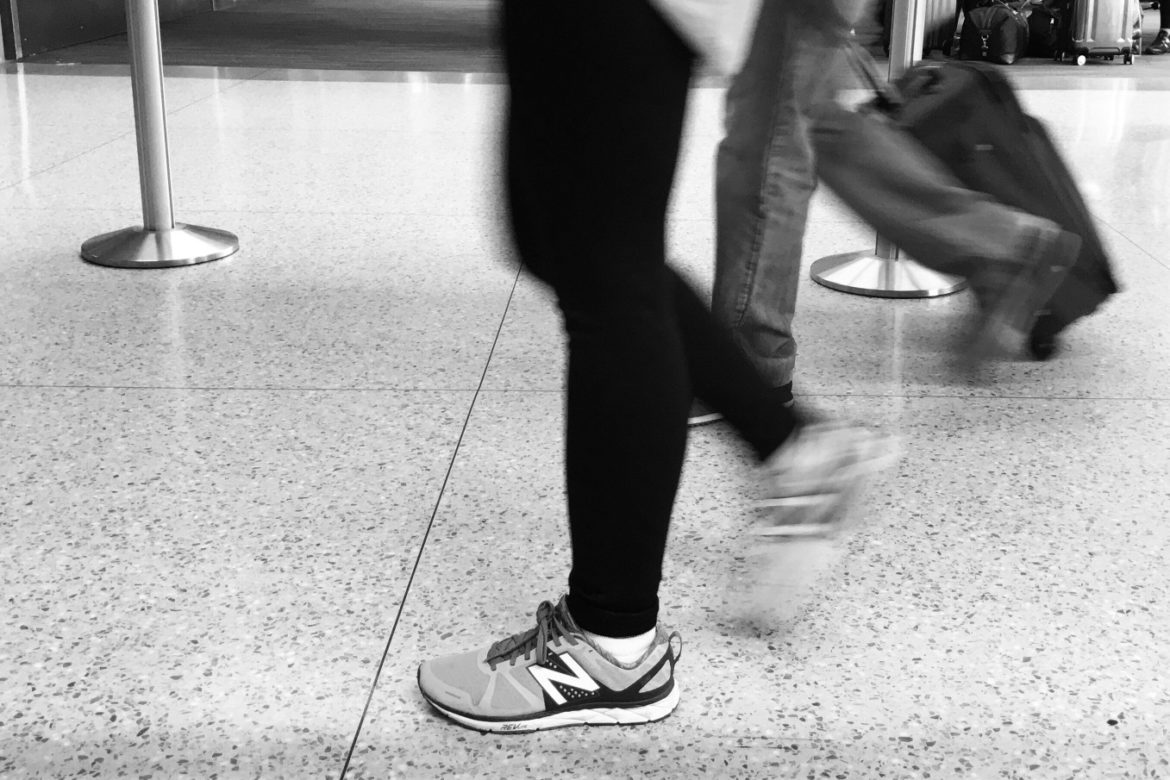
We have all seen the “zombie walk” at JFK Terminal 4. It’s that glazed-over look travelers get after thirteen hours in a pressurized metal tube. You’re dragging a carry-on like it weighs five hundred pounds and hunting for the nearest espresso stand. For a vacationer, that first day of “travel brain” is almost a tradition. For a digital nomad, it’s a lost workday. When your office is wherever you land, you can’t burn the first day just waiting for your internal clock to stop yelling.
Here’s the shift: long-haul travel isn’t a “time-out.” It’s a controlled environment where you can set yourself up to land and work. Not ten hours of flawless deep focus (let’s be real), but a meaningful block before dinner. That comes down to logistics, gear, and a few practical upgrades.
One more reality check: In our experience talking to the Modhop community, many digital nomads find that travel days are their least productive—with about a third of respondents telling us they’ve written off ‘transit days’ entirely when it comes to deep work. So if you feel behind after a flight, congrats—you’re normal. This guide is about being less normal on travel days.
How to Stay Productive on Long-Haul Flights (The Premium Economy Pivot)
Let’s talk about the elephant in the cabin: Economy. We love a good deal at modhop, but trying to finish a complex spreadsheet while the person in 32B reclines into your laptop screen is a recipe for a headache, not a breakthrough. This is where the “Premium Economy Pivot” comes in. We did a full breakdown here: Does Upgrading to Premium Economy Really Matter in 2026? If you’re trying to land and work, it’s one of the most “boring but effective” upgrades you can make.
For the digital nomad, Premium Economy isn’t about feeling fancy. It’s about having enough space to type without playing elbow Tetris. It’s also about a more reliable power setup and fewer constant micro-annoyances. Those add up. Your brain stays in “work mode” more easily when your body isn’t in “survive mode.”
Quick caveat on the money side: people love to call travel upgrades “tax-deductible,” but deductibility rules vary a lot by country and by employment status (employee vs contractor vs business owner). If you’re planning around deductions, talk to an accountant who knows your situation. Your seat is not a loophole.
Take a break at the nice hotel next door. Grand Hotel D’Angkor in Siem Reap, Cambodia. Photo: Modhop
The Airplane Mode Paradox (And Other Digital Nomad Lifestyle Tips for Your ‘High-Altitude Office’)
There’s a weird truth about long-haul productivity: you often get more done when you accept you’ll be offline. That’s the Airplane Mode Paradox. If you prep the right work, you stop doom-refreshing Slack, stop fighting weak Wi‑Fi, and actually finish something.
Once you have the space, you need a simple system. You can’t just open your laptop and expect the “zone” to magically arrive. The cabin is loud, bright, and full of interruptions. Your gear is your shield.
Here’s our Modhop Flight Stack:
Sony WH-1000XM5 noise-canceling headphones (your “office door”).
MZOO Sleep Eye Mask (cheap, comfy, blocks light without crushing your eyelids).
A small notebook + pen for offline outlining when the Wi‑Fi quits or your laptop is low.
We also like a tiny “seat pocket kit” for regulation, not vibes: earplugs (backup), lip balm, moisturizer, and water. Dry air + noise + light is the fastest path to mental fog. If you feel more human, you work more like one.
A Simple Long-Haul Flight Work Plan (Tiered Tasks That Actually Fit the Cabin)
One of the biggest mistakes nomads make is trying to do deep, focused work for ten hours straight. Meal service happens. Bathrooms happen. Turbulence happens. Also your seatmate will pick that moment to start a life story.
Instead, use a tiered task system. Before you leave for the airport, split your work into two buckets:
Your High-Focus bucket is for writing, coding, editing, planning, and anything that needs a quiet brain. Aim to do this early in the flight. The cabin is usually calmer and you still have energy.
Your Low-Focus bucket is for inbox cleanup, file organizing, admin, and “turbulence tasks.” These are the jobs you can do even when your elbow room disappears for a minute.
This isn’t about doing everything. It’s about landing with at least one real win, not a pile of half-started tabs.
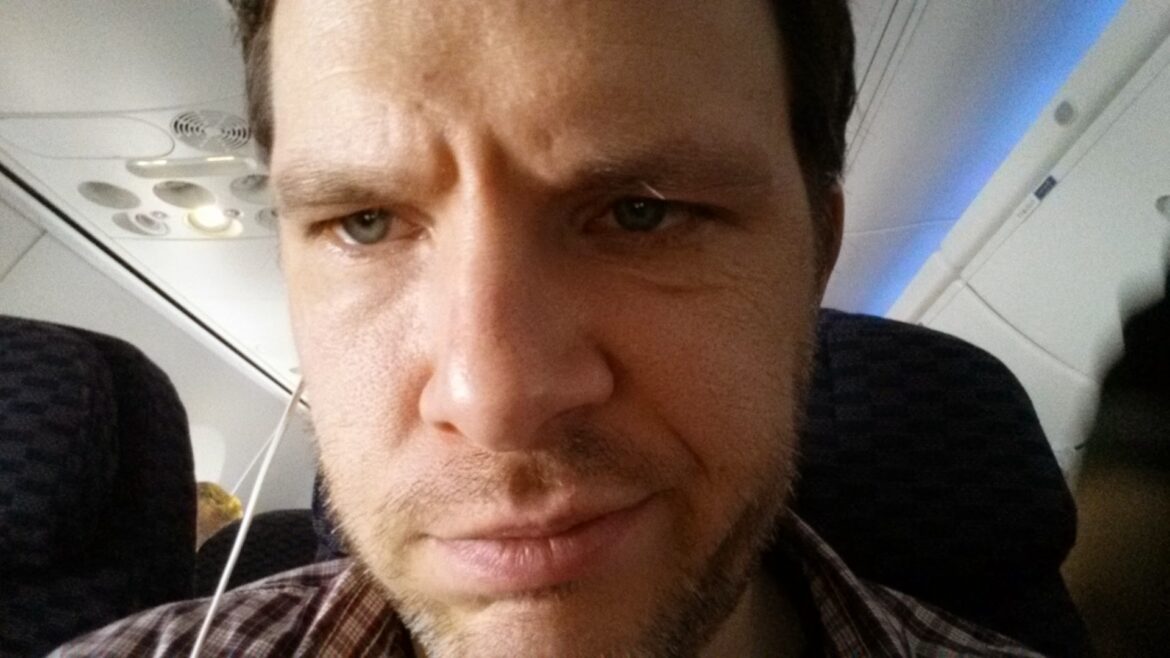
Jake diving into the high focus work bucket. Photo: Modhop
How to Avoid Jet Lag (So You Can Work on Day One)
The real battle is the first day after you land. Jet lag isn’t just being tired. It’s your body clock being out of sync with your deadlines. And yes, recovery can be fast or brutal: most people feel better in one to three days depending on how many time zones they cross.
We like the “First 30 Minutes” rule. No matter how tired you are, once you get to your place, do a tiny reset. Open your laptop. Handle one important task. Then set tomorrow’s schedule. You’re teaching your brain, “New place, same mission.”
A melatonin tip that’s easy to mess up: take it at your destination bedtime, not your departure bedtime. The point is to nudge your body clock toward where you are going, not where you were.
Strategic scheduling also means knowing when to quit. If you land in Europe from the U.S., that afternoon slump will hit hard. Plan for it. Put your easiest tasks there. Then get outside for light and movement. A short walk does more than a third espresso that you’ll regret at 2 a.m.
The “Done List” (Because Travel Days Get Messy)
Travel is unpredictable. Sometimes the power outlet is dead. Sometimes your seatmate is a talker who doesn’t recognize the universal sign for “I am not here to make friends.” When plans break, it’s easy to call the whole day a loss.
That’s why we like a “Done List.” Write down every small win. Sent one email? Count it. Outlined the next post? Count it. Seeing proof that you still moved things forward prevents the spiral. It also makes day one on the ground feel like a continuation, not a reset.
Sidebar: The Commute Reframe
Treat your long-haul day like a long commute, not a “lost day.”
If you can land with one finished task, one clean handoff, and a plan for tomorrow, you’ve already won. Anything extra is just bonus.
POV: A Modhop Lesson from 35,000 Feet
We’ve learned the hard way that not all “work” is flight-friendly. jake once tried to produce a podcast intro on a long-haul from Detroit to Tokyo. After thirty minutes of battling engine hum and a very confused flight attendant, he ended up with a recording that sounded like a vacuum cleaner convention.
The lesson? The plane is for planning, not production. Now, we use that airtime for “The Outline Sprint”—getting the skeleton of three articles or episodes down so we can hit the ground running without the technical headache.
We’ve unboxed many amenity kits, but few are as good as your own. Photo: Modhop
FAQ: Long-Haul Flight Productivity for Digital Nomads
Is Premium Economy worth it for working?
For flights over eight hours where you plan to work, the extra tray table space and reliable power outlet typically justify the price difference for most nomads.
How do I avoid jet lag fast?
You can’t delete it, but you can reduce it. Get light at the right time, move your body, and keep caffeine earlier in the day. If you use melatonin, take it at destination bedtime.
What should I pack in a flight work kit?
Keep it small and reachable: noise-canceling headphones (we like the Sony XM5s), a good eye mask (MZOO), a notebook, a pen, and basics like water + lip balm. The goal is fewer distractions and less mental fog.
Ultimately, being a digital nomad isn’t just about freedom. It’s about staying professional while you move. With the right seat plan, a small gear stack, and a realistic task list, you can turn a long-haul flight into a legit workday. You won’t just land ready to nap. You’ll land ready to work.
Join the Conversation
What’s your one non-negotiable piece of gear for getting work done on long-haul flights—and what’s the weirdest place you’ve actually been productive?
By the Modhop Editorial Team — independent travelers writing about location-independent work since 2013.
Modhop Founder Jake Redman brings years of global exploration and travel tips to the podcast and our videos at Modhop. Jake also produces audio branding for several music channels on SiriusXM.
For years, the Marriott Bonvoy Free Night Award (FNA) was the travel world’s version of a “participation trophy.” You’d get one every year for paying your credit card’s annual fee, […]
















Post comments
This post currently has no comments.