Published May 2, 2026
Today, May 2, 2026, the aviation world feels a little quieter, a lot more expensive, and significantly less yellow. Spirit Airlines has officially ceased operations. After a desperate $500 million government bailout attempt collapsed and jet fuel prices spiked from a projected $2.24/gallon to roughly $4.51/gallon — driven by Middle East tensions disrupting oil supply through the Strait of Hormuz — the “budget king” has finally folded its wings. It’s the first major U.S. airline shutdown since Midway Airlines collapsed in 2001 — 25 years ago. And beyond the memes, the human cost is brutal: roughly 17,000 jobs are gone, including 14,000 employees and another 3,000 contractors.
The Modhop Verdict: Any BFS upgrade under $100 was the steal of the century. Without it, you’re stuck paying the “Legacy Tax” just to breathe.
Spirit’s closure is a total disaster for the occasional upgrader. Cirium estimates the airline was removing roughly 800,000 seats from the market every two weeks in its final stretch, while Spirit’s market share slid from 5.1% to a projected 1.8%. That means the “Spirit Effect” — the invisible hand that kept legacy carriers from charging ridiculous prices for mediocre seats — is dead. You aren’t just losing a cheap flight to Fort Lauderdale; you’re losing the leverage that kept the entire industry’s upgrade prices in check.
As consumer advocate William McGee, senior fellow at the American Economic Liberties Project, told NPR after Spirit’s shutdown announcement: “You do not have to fly a small carrier in order to benefit from its presence, because they will bring down the big guys’ fares.”
Spirit shutdown stats at a glance:
- 17,000 jobs lost — 14,000 employees and 3,000 contractors
- 1.8 million seats removed — a major reduction in low-cost capacity
- $500 million bailout attempt — failed before operations ended
- 34 years of operations — Spirit flew from 1992 to 2026
- Fuel shock — projected jet fuel at $2.24/gallon jumped to roughly $4.51/gallon
The Death of the “Legendary Buy”
For years, Spirit was the punchline of every travel joke, but for the occasional upgrader, it was a secret weapon. Specifically, I’m talking about the Big Front Seat (BFS). It was arguably the best value proposition in the sky. You didn’t get the pre-departure mimosa or the warm nuts, but you got a wide, pre-reclined seat with 36 inches of pitch for a fraction of what Delta or United charged for Domestic First Class.
Let’s look at the Modhop Splurge Math on a typical three-hour hop from Chicago to Vegas. In Modhop terms, Splurge Math is our way of measuring whether a travel upgrade delivers enough comfort or convenience to justify the extra cash. On a good day, you could snag a Big Front Seat upgrade for about $50.
- Total Upgrade Cost: $50
- Flight Duration: 3 Hours
- Price-Per-Hour (PPH): $16.66/hr
At Modhop, PPH — or Price Per Hour — is our quick framework for judging what you’re paying for each hour of improved comfort. In our world, anything under $20 per hour for that much extra real estate is what we call a “Legendary Buy.” Compare that to a legacy carrier’s Domestic First Class upgrade, which usually starts at $150–$200 for the same route. You were essentially paying for the seat, not the theater of service, which is exactly what the occasional upgrader actually wants.
Why the “Spirit Effect” Mattered to Your Wallet
The Spirit Effect is the downward pressure on legacy airline pricing — including Basic Economy fares and upgrade costs — caused by the presence of an ultra-low-cost competitor in a market. With Spirit gone, that pricing ceiling has been removed.
Even if you never stepped foot on a yellow plane, Spirit was working for you. This is what economists call the “Spirit Effect.” When Spirit entered a market, legacy carriers like American, Delta, and United were forced to respond. They couldn’t just ignore a competitor offering $40 base fares. To compete, they introduced Basic Economy, those restrictive tickets that treat you like a piece of cargo but get you there for cheap.
More importantly, Spirit’s presence acted as a ceiling for upgrade pricing. If United wanted to charge you $200 to move into Economy Plus, they had to reckon with the fact that you could just walk over to the next gate and buy a Big Front Seat for $60. With Spirit gone, that competitive ceiling has vanished.

Without the low-cost pressure valve, we expect legacy carriers to get very aggressive, very quickly. We’re talking about sky-high load factors. With 800,000 seats disappearing every two-week window, the remaining planes are going to be packed tighter than a sardine tin. When planes are 98% full, airlines don’t need to offer you a “deal” on an upgrade. They know someone will pay the full freight, or they’ll just keep you in the back of the bus.
The Return of the Human Pretzel
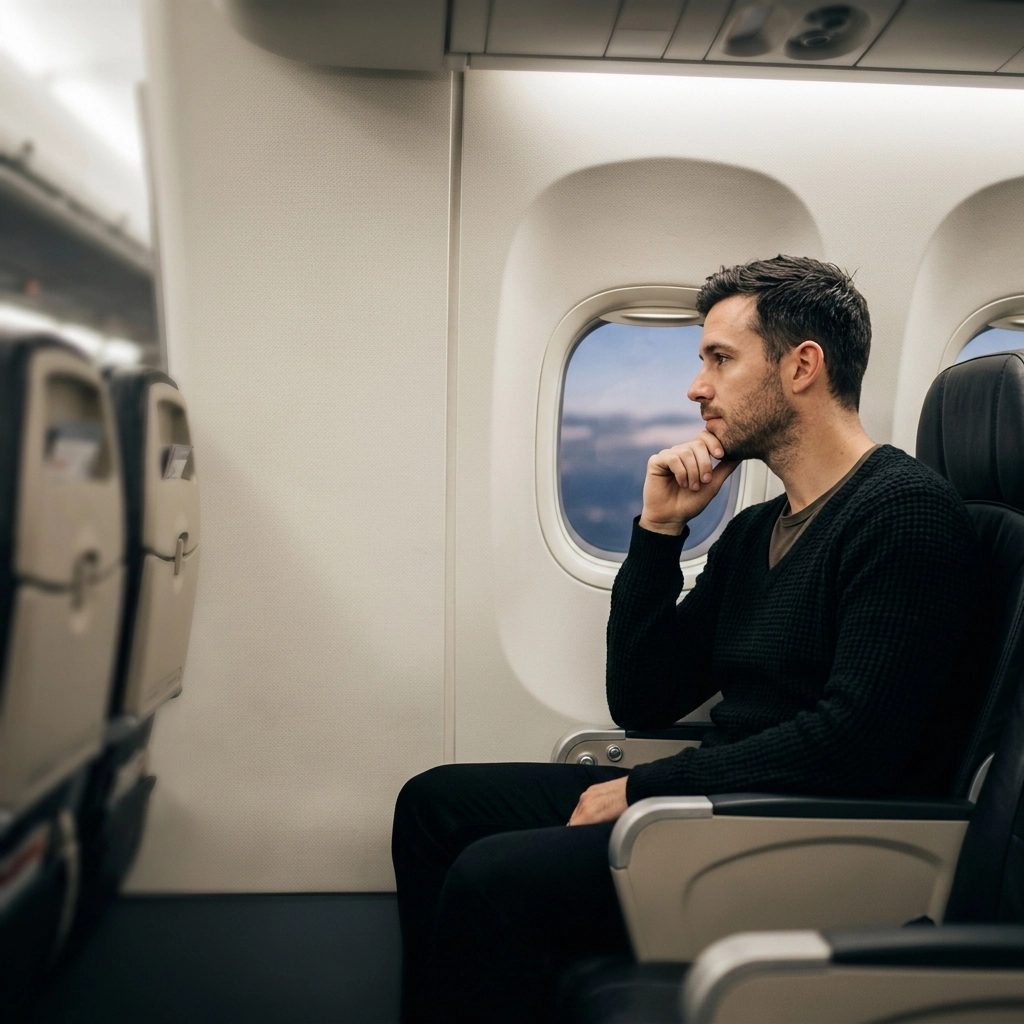
We’ve talked before about the “Human Pretzel”, that unfortunate state of being where your knees are in your chest and your neighbor’s elbow is in your ribs. For years, Spirit was the escape hatch. If you were having a rough week and couldn’t face the prospect of a cramped middle seat, you could spend fifty bucks and buy your way into comfort.
Now, that escape hatch is welded shut. As load factors skyrocket on the surviving airlines, the “Basic” restrictions are likely to tighten. We’ve already seen hints of it, but without a budget competitor to keep them honest, don’t be surprised if your legacy “Basic Economy” ticket eventually requires you to pay for the privilege of using the overhead bin or, heaven forbid, the bathroom.
If you’re feeling the walls close in, you’re going to find that the “adventure” now starts with a much higher credit card statement. The loss of Spirit isn’t just about losing a specific airline; it’s about losing the industry’s most effective price-check. If you want the broader airline backdrop, our look at The WiFi Wars is a good reminder that once competition fades, “optional” fees have a funny way of becoming permanent.
Splurge Math: BFS vs. Legacy First Class
Let’s break down why we’re mourning the BFS so hard. We’re comparing a typical Spirit Big Front Seat upgrade to a standard Domestic First Class upgrade on a legacy carrier for a 4-hour flight.
| Feature |
Spirit Big Front Seat |
Legacy Domestic First |
| Typical Upgrade Cost |
$70 |
$250 |
| PPH (Price Per Hour) |
$17.50 |
$62.50 |
| Seat Width |
18.5 inches |
21 inches |
| Legroom (Pitch) |
36 inches |
37-38 inches |
| Free Drinks/Food |
No |
Yes |
| Modhop Verdict |
Strong Buy |
Situational |
As you can see, you were paying an extra $180 for a slightly better gin and tonic and a banana. Yes, the BFS was technically a touch narrower than legacy first — 18.5 inches versus 21 — but it was still 6 inches wider than the cramped 17.5-inch legacy economy seat you’d otherwise be wedged into. For the occasional upgrader who values space over snacks, Spirit was the undisputed champion. Without that $17.50/hr option, your only choice now is to pay the $62.50/hr “legacy tax” or stay a human pretzel. It’s a lose-lose situation.

Surviving the Post-Spirit Era
So, how do we navigate this new, more expensive sky? First, you have to get even more tactical.
- Monitor Load Factors: Use apps that show you how many seats are left on a flight. If the plane is half-empty — now even rarer — you might still snag a last-minute upgrade deal.
- Loyalty is No Longer Optional: Without a budget disruptor, the legacy carriers are going to lean hard into their loyalty programs. If you aren’t chasing status, you’re the one paying for the people who are.
- The “Poor Man’s Upgrade”: Sometimes the best move is to book the extra-legroom exit row the second it becomes available. It’s not a Big Front Seat, but it’s better than the alternative.
If you’re traveling with family, the stakes are even higher. Cheap flights have a way of disappearing right when you need them most. And if consumer advocates predict fares will rise, that pain won’t stay limited to former Spirit routes. We’re entering an era where travel monotony might become the norm because those little splurges that made the journey bearable are getting harder to justify.
Airport Intel: The Empty Gates
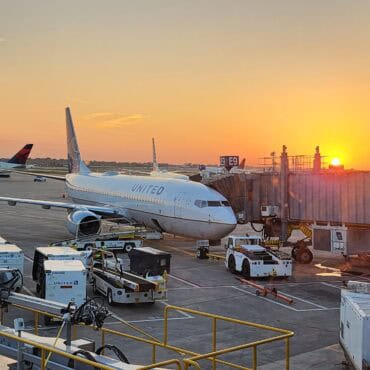
Walking through terminals today, the sight of empty Spirit gates is a sobering reminder of how volatile this industry is. We saw the writing on the wall when the merger with JetBlue was blocked, and the fuel shock was the final blow that the $500 million bailout couldn’t fix. Those bright yellow kiosks are being covered in plastic as we speak.
For those of us who live in “fortress hubs” where one legacy carrier dominates, this is especially bad news. Spirit was often the only thing stopping a major carrier from having a total monopoly on certain routes. Expect those “non-stop” prices to climb as the competition disappears. Frontier may look like the obvious landing spot for displaced ultra-low-cost flyers, but it’s worth being precise here: the airline’s “New Frontier” premium push — including UpFront Plus and Frontier’s First Class rollout in early 2026 — was already underway before Spirit collapsed. So yes, flyers still have somewhere to land. But the real problem is that the price pressure is gone.

Frequently Asked Questions
When did Spirit Airlines shut down?
Spirit officially ceased operations on May 2, 2026.
How much will airline fares go up after the Spirit Airlines shutdown?
Expect noticeable hikes on routes where Spirit was a meaningful competitor — particularly Florida, Caribbean, and Latin America markets where Spirit had outsized presence. Peer-reviewed research consistently shows that when a low-cost carrier exits a market, full-service carriers raise fares (the “airline substitution effect”). Industry analysts including Henry Harteveldt at Atmosphere Research Group have warned that without ULCC pricing pressure, legacy carriers can make higher fares stick. The clean rule of thumb: the more dominant Spirit was on a given route, the bigger the increase.
Will Big Front Seats come back?
Not in the same form, at least not soon. Another airline may acquire some of Spirit’s aircraft, but that doesn’t mean it will preserve the Big Front Seat layout. Most buyers would have a strong incentive to refit cabins for higher-density revenue instead of keeping a product that was beloved precisely because it was underpriced.
What can stranded passengers do?
Start with your credit card issuer and request a chargeback for canceled future travel. Then price out rescue fares fast. JetBlue has floated capped options around $99 on select disrupted routes, while Southwest-style recovery fares have landed more in the $200–$400 range depending on market and timing. Availability is the real issue, so speed matters more than perfection here.
What happens to my Spirit miles and vouchers?
In short: they’re likely gone. When an airline shuts down completely, unsecured creditors — including many ticket holders and loyalty members — are usually last in line. You can try a credit card chargeback for future flights, but those “Free Spirit” points are officially worth zero.
Will another airline buy Spirit’s planes?
Most likely. Delta and United are already circling like vultures. However, don’t expect them to keep the Big Front Seat configuration. They will likely rip those out and replace them with standard 3-3 seating to maximize revenue, effectively ending the BFS era for good.
Are other low-cost carriers like Frontier or Allegiant safe?
For now, yes — but the same fuel-cost pressure that broke Spirit is hitting all of them. Frontier and Allegiant remain the largest surviving ULCCs, with Avelo and Breeze as smaller newer entrants. Frontier had already pivoted upmarket before Spirit’s collapse — its UpFront Plus product is live and First Class debuts in early 2026 — so displaced flyers have somewhere to land. But none of these carriers individually has the scale to replicate the downward pricing pressure Spirit exerted on legacy fares.
The Final Word
Spirit Airlines wasn’t perfect. It was loud, the seats didn’t recline, and the “unbundled” fees could be a headache if you didn’t know the rules. But it was a disruptor. It was the scrappy kid in the back of the class making sure the big guys didn’t get too comfortable.
For the occasional upgrader, the Big Front Seat was a sanctuary — a way to fly in comfort without needing a CEO’s salary or a mountain of points. As we say goodbye to the yellow bird, we’re also saying goodbye to a certain kind of travel freedom. Rest in peace, BFS. You were too good for this world — and apparently, too cheap for your own survival.
Join the Conversation
Did you ever experience the Big Front Seat, or were you a “never-Spirit” flyer? How do you think this closure will affect your travel budget for the rest of 2026? Share your best Spirit survival stories or your predictions for the next “Spirit Effect” in the comments below!
SEO Title: Spirit Airlines Shutdown: What the Big Front Seat Loss Means
SEO Meta Description: The Spirit Airlines shutdown ends the Big Front Seat era. Here’s why it spikes upgrade prices for every traveler — not just Spirit flyers.
URL Slug: spirit-airlines-shutdown-big-front-seat












Post comments
This post currently has no comments.