If you have ever spent hours toggling between dates on a map trying to find a price that doesn’t make your eyes water, you have likely stumbled upon the “magic” price drop. One minute the stay is $3,000 for three weeks, and the next, you add a few days and the total plummets to $1,800. This isn’t a glitch in the matrix; it is the Airbnb monthly discount, and it is the foundational secret of the “slomad” lifestyle.
The modhop editorial crew has been tracking a shift in how people travel. It is no longer just about the weekend warrior or the nomadic “hustle culture.” There is a growing group of travelers referred to as “slomads”, people who choose to live in a single city for 30 to 90 days, soaking up the local rhythm instead of just checking off tourist sites. According to the 2025 “Slomads Rising” study published in Sustainability (MDPI), this isn’t just a fringe hobby anymore. The data shows that long-term stays have become a massive pillar of the travel economy, with Airbnb reporting that approximately one in five nights booked on their platform is now part of a stay of 28 nights or longer.
The primary reason to embrace slow travel is financial, but it’s also a matter of logistics. Most hosts dread the “turnover”, the constant cleaning, key handoffs, and the risk of empty nights between short-term guests. To avoid this, they offer an Airbnb monthly discount that typically kicks in at exactly 28 nights. By securing one guest for a full month, the host guarantees income and slashes their operational headaches.
These discounts aren’t just a measly 5% or 10% designed to make you feel like you got a deal. It is very common to see price drops of 20%, 30%, or even 50% once you hit that 28-night mark. This creates a weird paradox where staying for 28 nights is often significantly cheaper than staying for 20 nights. If you are planning a three-week trip, you are almost always better off booking the full month and leaving a few days early if you have to. You get more time, a lower bill, and a “home base” that actually feels like home rather than a temporary pit stop.
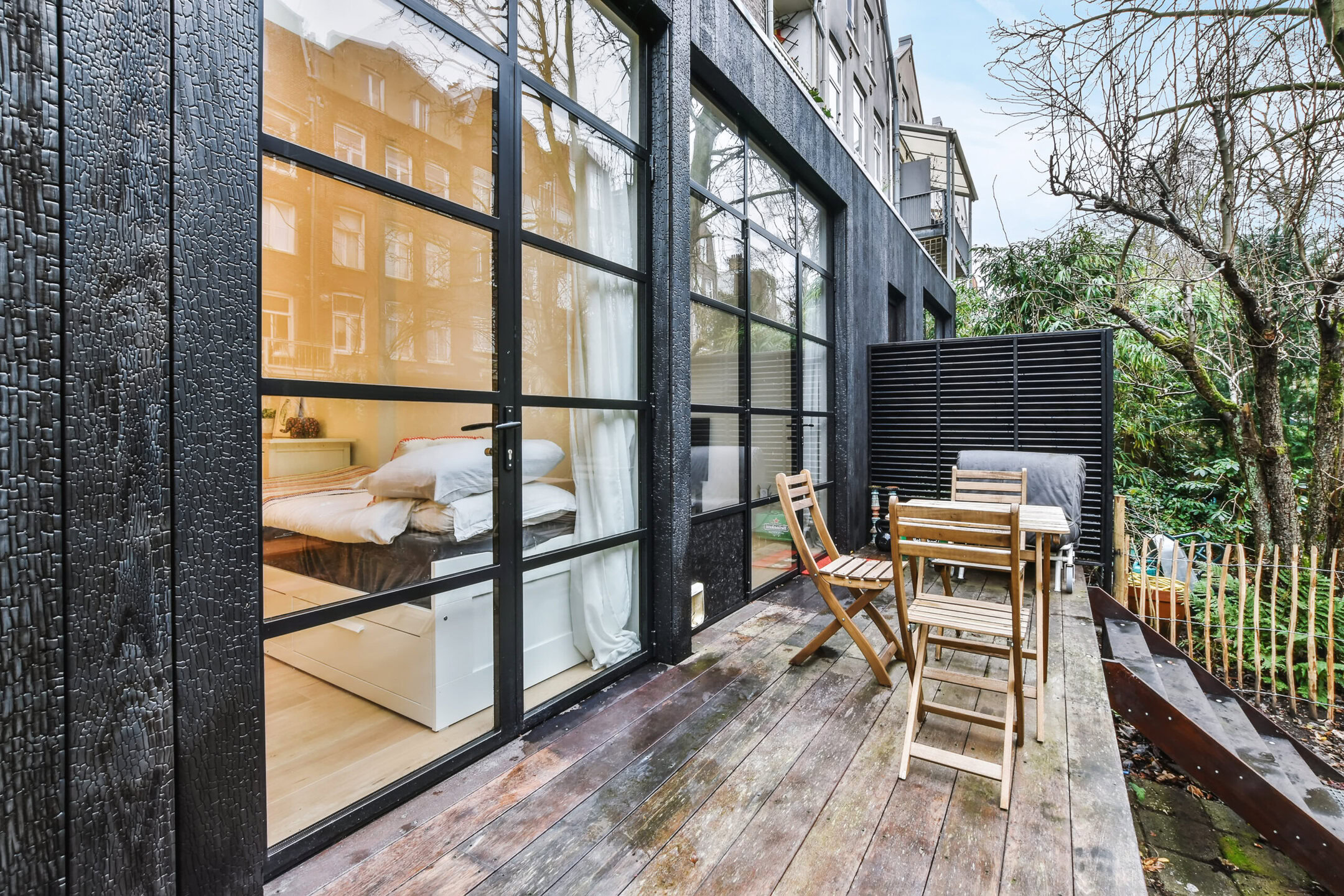
Less money, more space for longer stays. – Photo: Modhop
The Concept of Splurge Math
We love a good mental gymnastic at modhop, and “Splurge Math” is our favorite way to justify the good life. When you secure a deep Airbnb monthly discount, you aren’t just saving money; you are redistributing it. If your monthly rent in a city like Lisbon or Mexico City ends up being $1,200 less than you budgeted for a nightly hotel rate, that is $1,200 of “found money” in our books.
That surplus can go toward the things that actually make travel memorable. Use it for a weekend at a high-end spa, a business class upgrade on your next long-haul flight, or even just some airport lounge access to make the transit days feel less like a chore. The goal of being a slomad isn’t necessarily to spend the least amount of money possible; it’s to spend your money where it has the highest impact on your happiness and productivity.
The Aparthotel Pivot
While Airbnb is an obvious starting point, the extended-stay segment is one of the fastest-growing corners of the hospitality industry right now — and the big hotel brands have noticed. Hilton’s Home2 Suites, Marriott’s Residence Inn, and Hyatt’s newly launched Hyatt Studios are all purpose-built for the 28-night-and-beyond guest. If you have hotel loyalty status, a month-long stay at one of these properties can be a goldmine for points, upgrades, and complimentary breakfast that effectively lowers your daily cost further. For something more boutique, managed operators like Blueground and Kasa offer apartment-style consistency without the risk of a “ghost host” — though always verify any newer brand is still operating before you book.
The benefit here is consistency. You know the Wi-Fi will actually work at the advertised speeds, you know there is a front desk or a maintenance team if the heater breaks, and you won’t find a dusty “live, laugh, love” sign in the kitchen. These units are built for the modern slomad who needs to jump on a Zoom call at 9:00 AM and cannot afford to wait for a frustrated host to respond to a message about a dead router. If you are looking for a long-term Airbnb rental, filtering for these professionally managed properties can save you a lot of grief.
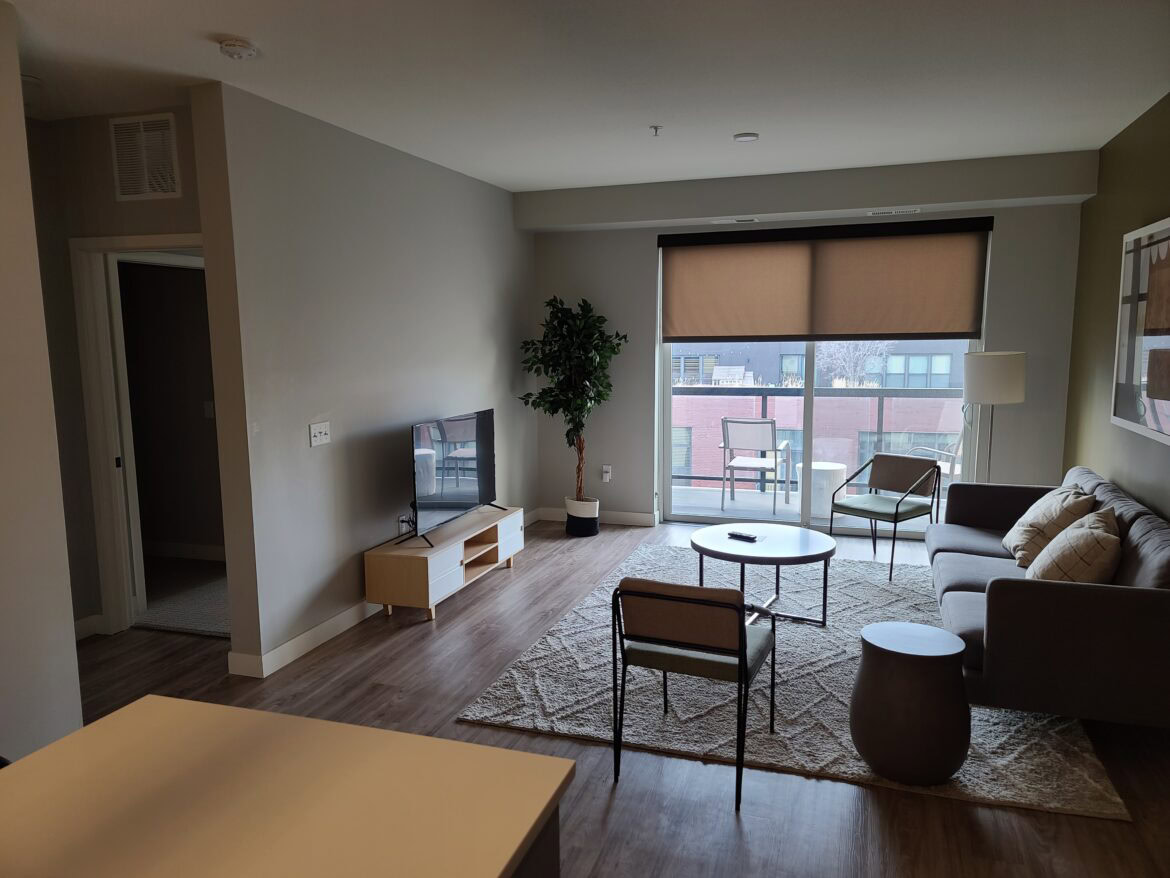
Our “aparthotel” in Minneapolis. (RIP Sonder) – Photo: Modhop
Best Slomad Starter Cities
If you are looking to book your first long-term Airbnb rental, some cities are built for this lifestyle better than others. These “Starter Cities” have high-quality housing stock, great coffee shop culture for working, and hosts who are very used to the monthly stay model.
Lisbon, Portugal: The classic slomad hub. It is walkable, relatively affordable compared to London or NYC, and has a community that will welcome you with open arms.
Mexico City (CDMX), Mexico: Specifically, the neighborhoods of Roma and Condesa. The food is world-class, and the monthly discounts here are often substantial if you book a few months in advance.
Chiang Mai, Thailand: The original digital nomad capital. While it is changing, you can still find incredible monthly deals on modern condos with pools and gyms.
Tbilisi, Georgia: A bit of a hidden gem for the adventurous slomad. The wine is incredible, the architecture is stunning, and the cost of living allows your “Splurge Math” to go very, very far.
“More money for milkshakes” says Jake. – Photo: Modhop
The Pre-Booking Vetting Checklist
Before you commit to a 30-day stay and lock in that Airbnb monthly discount, you need to be certain the place isn’t a dud. Once you are past the initial refund window, you are committed. Here is our non-negotiable checklist for vetting a long-term stay:
The Wi-Fi Speed Test: Never take “High Speed” as an answer. Check recent reviews or, if you’re feeling bold, even ask the host to run a speed test and send you a screenshot of the results before you book.
The Full Kitchen Audit: Look at the photos closely. Is there a full-sized fridge and a stove with at least two burners? Living on takeout for 30 days gets old (and expensive) fast.
The Walk Score: Use Google Maps to see if there is a grocery store and a decent coffee shop within a 10-minute walk.
AC/Heating Reality Check: Don’t assume. In many European cities, AC is a luxury. In many high-altitude South American cities, heating is non-existent. Ask specifically about both.
Laundry Access: Does the unit have a washer? If not, is there a “lavanderia” nearby that offers drop-off service? Doing laundry in a sink for a month is a nightmare.
Understanding the Fine Print: Taxes and Policies
Booking for a month changes the legal landscape of your stay. In some jurisdictions, local occupancy taxes, the extra fees that usually add 10-15% to your nightly bill, may be waived for stays over 30 days because you are legally considered a “tenant” rather than a “guest.” Depending on where you’re staying, these savings can be automatic or require a bit of digging, so it is always worth checking the local rules before you book.
However, the cancellation policies are much stricter for a long-term Airbnb rental. Generally, Airbnb offers a 48-hour window for a full refund after booking, provided the stay is at least 28 days away. After that 48-hour window closes, the first 30 days of the stay are typically non-refundable. This is why the vetting process above is so critical; you really don’t want to find out the bed is a rock and the neighbors have a drum kit on day two of a 30-day stay.
Why Slowing Down is the Ultimate Travel Hack
Beyond your Airbnb monthly discount, the real value of the slomad life is the reduction of “relocation friction.” Moving every three days is exhausting. You spend half your time figuring out how the shower works, where to buy eggs, or which bus goes toward the city center. When you stay for a month, that friction disappears after the first few days.
You start to have “a spot.” The local barista knows your order. You find the shortcut to the park that isn’t on the map. You actually get to be in the city rather than just looking at it through a viewfinder. And if you’re coming from a high-stress environment, this pace is a literal lifesaver. If you find yourself dreading the logistics of travel, maybe it’s time to stop traveling and start living elsewhere for a while. It’s better for your brain, and as we’ve shown, it’s significantly better for your wallet.
FAQ: Airbnb Monthly Discounts
How do I get the monthly discount?
In most cases, it’s automatic. When you enter dates for 28 nights or more, the discounted rate will appear in the price breakdown on the right-hand side of the listing. If you don’t see one, that specific host might not have set a long-term rate.
Can I negotiate an even deeper discount?
Yes. If you are booking during the off-season or if the calendar looks suspiciously empty, send a polite message to the host. Ask if they would be open to a “special offer” for a long-term guest who will take great care of the place.
Is the discount applied to the cleaning fee?
Usually, no. The cleaning fee is a flat rate set by the host. This is actually another win for slomads: paying one $100 cleaning fee for 30 days is much better than paying it for a three-day weekend where it can double your nightly cost.
What happens if I need to leave early?
Because of the long-term cancellation policy, you likely won’t get a refund for the remaining nights. You can often “change” your checkout date through the app, though the host must approve the change. Be careful: this may trigger a recalculation that removes your monthly discount, potentially making the shorter stay more expensive than the original month.
Join the Conversation
Have you ever scored a massive Airbnb monthly discount that felt like a total steal? Or did you have a “long-term stay” horror story that made you wish you’d stuck to a hotel? Share your best slow travel tips or your vetting secrets in the comments below: we want to hear how you make the slomad life work!
Modhop Host & Founder Jake Redman brings years of global exploration and travel tips to the podcast and our videos at Modhop. Jake is also a Producer and Host for SiriusXM.
Just when we thought the back of the plane couldn’t get any more “interesting,” United Airlines decided to throw us a literal cushion. Enter the United Relax Row: an economy […]
















Post comments
This post currently has no comments.