March 2026. The Middle East corridor is effectively a no-go zone. Tehran, Baghdad, Damascus, Tel Aviv: dark. Now the knock-on stuff too: Bahrain, Jordan, Kuwait, Lebanon, Qatar, Saudi Arabia, and the UAE showing up in the “don’t mess around” bucket (GNSS interference / ESCAT zones per EASA conflict-zone guidance).
The result? Absolute chaos for Europe-to-Asia routes. Prices aren’t “a little higher.” They’re showing up to 10x in real searches. Airlines are burning fuel + crew hours to go around. You’re paying for it.
Intel: The Bypass Routes
Airlines have two choices right now. Neither is cheap.
The Northern Bypass (Caucasus / Caspian / Central Asia)
Used to be the “cleaner” option. Not anymore. After the March 5 drone strikes in Azerbaijan, that Caucasus / Northern line is getting messy fast—more restrictions, more ATC workload, more “we might divert” energy. Still used. Just don’t assume it’s the easy button.
The Southern Bypass (Egypt–Saudi–Oman)
The main artery. Route: Egypt, into Saudi, then hooking through Oman. Problem: GNSS interference + ESCAT-type comms issues in the broader Gulf region. Plus choke points where everyone funnels into the same corridor.
Intel: Carrier Impact
Who’s hurting? Everyone. But the pain’s not equal.
Gulf Carriers: Emirates, Qatar, Etihad. Their hubs sit right next to (or inside) the affected airspace stack: Bahrain/Jordan/Kuwait/Lebanon/Qatar/Saudi/UAE. Even when ops resume, the routings are longer and the margins get ugly.
Indian Carriers: Air India and Indigo have already pulled the plug on several Gulf destinations. If you’re booked on these, check status. Now.
European Majors: Lufthansa and KLM are taking the long way around. Expect “operational” add-ons and fewer cheap fare buckets.
Actual Beneficiaries:Turkish Airlines + Istanbul-connected routings. IST’s sitting in the right spot to stitch Europe ↔ Asia without needing to thread the Gulf needle, and TK’s got the network density to catch spillover demand.
Pro-tip: AirHelp / EU261 (when you get involuntarily rerouted)
If the airline reroutes you involuntarily (and you’re on an itinerary that triggers EU261), you may be owed compensation depending on what caused the disruption and your arrival delay. Don’t guess. Document everything (original schedule, new schedule, delay minutes, messages). AirHelp can be a quick “is this claim viable?” filter.
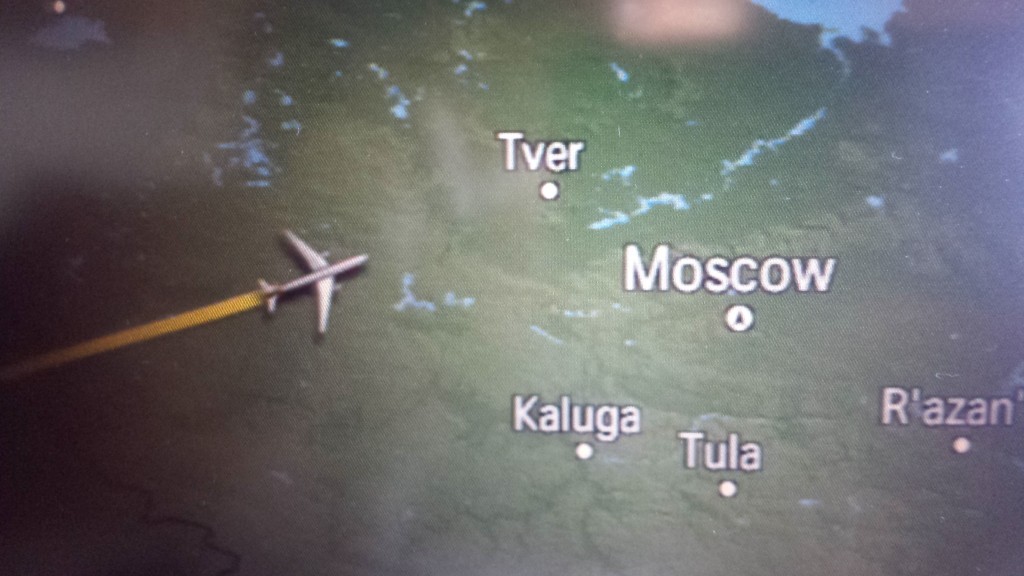
Throwback to a simpler time: Passing Moscow on our way to Beijing in 2014.
Intel: How to Dodge the Spike
Don’t just click “buy.” You’re looking for the gaps in the logic.
1. Stopover Strategy (The Pivot)
Instead of a direct hub-and-spoke through the Middle East, look for two-ticket solutions.
Westbound: Fly to a major hub like London or Paris on a separate ticket.
Eastbound: Look for legs through Southeast Asia or even the “back way” over the Pacific.
2. The Africa Loop
Counterintuitive. Works. Some carriers are routing through African hubs to avoid the central Middle East entirely. Look at Ethiopian Airlines through Addis Ababa. They aren’t facing the same airspace restrictions and their pricing hasn’t caught up to the up to 10x surge yet.
3. Track the FIRs
Use tools like FlightRadar24 or ADS-B Exchange. Look at the actual tracks for the route you want. If the plane’s doing a U-turn around Iran, expect delays. If it’s threading new chokepoints, expect holds.
Also: don’t assume the Caucasus/Northern Bypass is “clean” anymore. Post–March 5, it’s a variable.
Intel: The Points Play
When cash prices go up to 10x, points often stay semi-normal. That’s the whole game.
Fixed-Value Redemptions: If a flight is $4,000 but only 80k miles, you’re doing fine.
Partner Booking: Don’t book through the operating carrier by default. Use partners when the cash side is melting down.
Flying Blue Promo Rewards (sweet spot): If a Promo lines up with your city pair, grab it. This is one of the few times “published discount award pricing” can beat the chaos.
Last-Minute Availability: As people cancel due to reroutes, award seats can pop 24–48 hours out. Be ready to move.
Intel: Middle East Airspace Closures and the On-Board Reality
Expect longer flight times. A 10-hour hop is now 13. A 12-hour flight is pushing 15.
Back of the plane: pack like it’s a long-haul. Up front: service flow can get weird when duty days stretch and catering plans don’t match reality.
Pro-tip: Long Flight Leverage
Longer sector = more variables. Weight balance. crew rest planning. last-minute cabin downgrades on oversold Y. You can sometimes ask at the gate (politely, early) if they’re moving people for rest seats / weight & balance. Not guaranteed. But this is the exact scenario where “random upgrades” actually happen.
Timing: these usually clear T-30 to T-20. So be at the gate early. Lists often close around T-10. If you’re wandering back from a coffee run, congrats: you played yourself.
When reroutes blow up schedules, premium cabins can get weirdly empty on specific legs (especially repositioning-ish segments). If your airline offers Plusgrade, throw a low bid and see what sticks. Worst case: you keep your seat. Best case: you buy comfort at a discount while everyone else is rage-refreshing.
If you’re feeling overwhelmed by the options, here’s our running breakdown of who’s handling the mess vs. who’s just slapping on fees.
Intel: Final Check
Before you pay crisis pricing:
Flight time 3 hours longer? That’s fuel burn passed to you. Check it.
Route suddenly “scenic”? Northern Bypass isn’t clean. Southern corridor is a choke. Assume delays.
Equipment swap to smaller metal? Seats vanish. Reaccom gets ugly. Check it.
Rules: change/credit/refund. If airspace reopens, you want the option to rebook down.
Have you been hit by a massive fare jump this month, or did you find a genius way around the Middle East airspace wall? Drop your route-dodging tips or horror stories in the comments below( let’s help each other out.)
Modhop Host & Founder Jake Redman brings years of global exploration and travel tips to the podcast and our videos at Modhop. Jake is also a Producer and Host for SiriusXM.
JAL just pushed the Spring 2026 refresh for all international long-haul routes as of March 1, and the JAL Business Class menu 2026 is looking sharp with seasonal transitions and […]

















Post comments
This post currently has no comments.