By Jake Redman, Modhop CEO — with 50+ long-haul routes flown annually.
Quick Answer: Premium economy is worth it when the upgrade costs less than $50 per hour of flight time. On a 10-hour flight, that means any upgrade under $500 is worth serious consideration. Use the Price-Per-Hour (PPH) formula — Upgrade Cost ÷ Flight Hours — to decide in seconds.
Photo: Modhop
We have all been there. You’re sitting at your gate, nursing a lukewarm coffee, and you look over at the priority boarding lane. Those people aren’t necessarily rich, but they look significantly less stressed than you do. You start wondering if that $250 “limited time offer” to upgrade to premium economy was actually a steal.
And yes—if you’ve ever caught yourself asking, ‘is premium economy worth it,’ you’re in very good company. The airlines are very good at making you feel like every upgrade matters. To fight back, you need a system. You need a way to strip the emotion out of the seat map and look at the cold, hard numbers. Welcome to Splurge Math.
What is premium economy? Premium economy is a cabin class offered by most major long-haul carriers, sitting between standard economy and business class. It typically offers 38–40 inches of seat pitch, wider seats (19–20 inches vs. 17–18 inches in economy), enhanced meal service, priority boarding, and a higher baggage allowance — at a price roughly 40–100% above economy class.
Most people look at an upgrade price in a vacuum. They see $300 and think, “That’s a lot of money.” But $300 for a short hop under 90 minutes is a waste of money. $300 for a ten-hour haul to Tokyo? Totally different conversation. To make sense of smart travel upgrades for anyone, we use the Price-Per-Hour (PPH) formula.
The math is simple: take the total cost of the upgrade and divide it by the number of hours you will actually be in that seat.
Upgrade Cost / Flight Hours = PPH
If you are looking at a $400 upgrade for an eight-hour flight, your PPH is $50. Once you have that number, you can stop guessing and start following the Modhop Thresholds. These rules of thumb keep you honest and ensure you are getting the best affordable luxury travel hacks without blowing your entire vacation budget before you even land.
PPH
Verdict
Zone
Under $50/hr
Buy it
Must-Buy Zone
$50–$100/hr
Evaluate carefully
Grey Zone
$100+/hr
Skip it
Anniversary Only
Under $50/Hour: The “Must-Buy” Zone
If your PPH calculation comes out to less than $50 an hour, you should probably just click “confirm” and move on with your life. At this price point, you are essentially paying for a slightly nicer dinner and a few drinks, but you are getting five to seven inches of extra legroom and a wider seat. On a long-haul flight, that extra space is the difference between arriving as a functioning human being or a crumpled-up piece of human origami.
$50–$100/Hour: The “Grey Zone”
This is the price of a decent steak dinner per hour. To justify this, look at the specifics: is it a red-eye? If you are trying to sleep, that extra recline becomes much more valuable. Are you a taller traveler who physically suffers in standard economy? Then the splurge is more of a medical necessity. If it’s a daytime flight and you’re just doing it for the “vibes,” you might want to save that cash for a better hotel once you land.
$100+/Hour: The “Anniversary Only” Zone
Unless you are celebrating a major milestone, getting proposed to, or someone else is footing the bill, paying over $100 per hour for Premium Economy is usually a waste of money. At this rate, a six-hour flight is costing you an extra $600. For that kind of money, you could have a world-class meal in Paris or a private car service for your entire trip. Don’t let the shiny branding distract you from the fact that you are still sitting in a chair in a pressurized metal tube.
How Much Extra Legroom Do You Actually Get in Premium Economy?
The biggest selling point for premium economy is usually the extra space. Airlines love to brag about 38–40 inches of pitch compared to the standard 30–32 inches in economy. On paper, five to eight inches sounds like a lot. In reality, it’s about the length of a smartphone.
Is a smartphone’s length of extra space worth skipping three nice dinners at your destination? That’s the real-world trade-off. If you’re flying to a food-centric city like Lisbon, that $400 upgrade could be the difference between eating at a tourist trap and having the best meal of your life.
There’s also a legit health angle here. On flights over about 6–8 hours, people worry (reasonably) about circulation and DVT risk. Extra space doesn’t magically solve that, but it makes it easier to stand up, do ankle circles, and take a lap without feeling like you’re climbing out of a Jenga tower.
Premium economy value usually breaks down into a few categories.
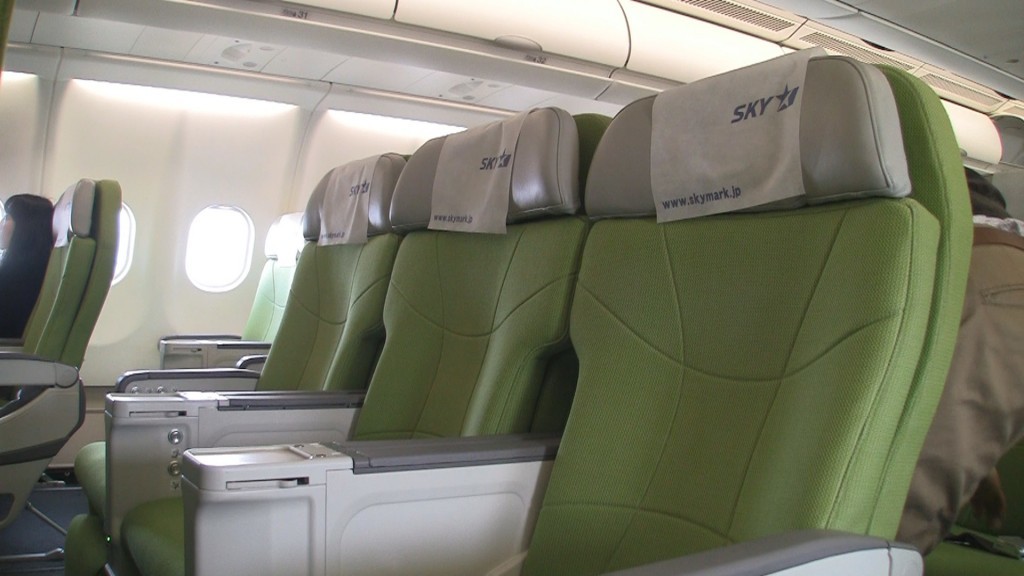
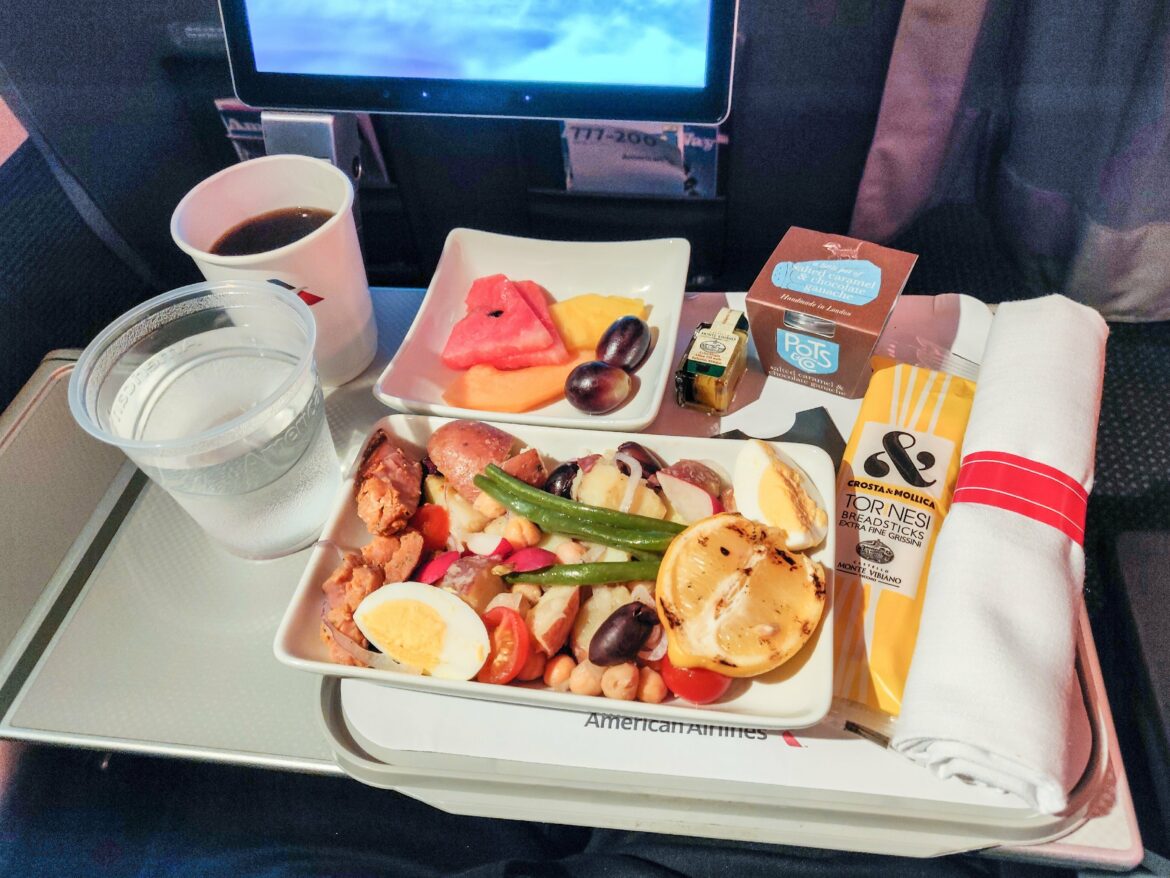
Cabin comfort: A slightly wider seat, more recline, and a smaller cabin, so there’s less overhead-bin hunger games and usually faster service. Food is typically an upgraded first meal, though quality varies significantly by carrier.
Baggage math: You may get a higher baggage allowance. If you were already going to pay for bags, subtract that from your upgrade price to get your “effective” upgrade cost.
Pro Tip: SeatGuru shut down in late 2025, so use a seat map tool like SeatMaps (seatmaps.com) instead. It’s the closest thing to what SeatGuru used to be, offering colored seat maps, exact pitch/width data, and warnings about problem seats (like those with missing windows or annoying drafts). For pure visual seat-map nerds, AeroLOPA is also fantastic, though it lacks the “good/avoid” commentary that helps casual travelers decide in seconds.
The Psychology of the Occasional Upgrader
One thing we don’t talk about enough in travel media is the “newbie anxiety” that comes with upgrading. We’ve seen it a thousand times: someone splurges on a nice seat but then spends the whole flight worried they are doing something wrong. Do I get a free drink? Can I use the fancy bathroom? Should I tip the lounge bartender?
At modhop, we believe luxury should be accessible and unpretentious. If you’ve paid the PPH, you belong there. Don’t be the person who feels guilty for taking the hot towel. If you are feeling a bit under the weather or just stressed about the journey, check out our guide to feeling better while traveling. Sometimes, the upgrade isn’t about the seat width; it’s about the mental health break that comes with a slightly quieter cabin.
Photo: Modhop
Strategic Splurging: The “Economy There, Business Back” Move
If you’re looking for the ultimate smart travel upgrade for anyone, consider the split-strategy. This is one of my favorite moves. On the way out, you’re usually running on adrenaline and excitement. You can handle the cramped quarters of coach because you know a beach or a European city is waiting for you.
On the way back? You’re tired, your legs ache from walking ten miles a day, and the post-vacation blues are starting to set in. That’s when the upgrade matters most. Spending your “Splurge Math” budget on the return leg helps you arrive home feeling refreshed rather than like you need a vacation from your vacation. Whether you are planning a trip to Italy or heading home from a long stint in the sun, the “Business Back” strategy is one of the smartest ways to use your points or cash.
Upgrading to Premium Economy: Bidding, Points, and the Sneaky Business Class Bump
Before you pay sticker price, check if your airline offers upgrade bidding—it’s one of the easiest ways to make upgrading to premium economy feel a lot less painful. Carriers like Lufthansa and Delta often let you place an offer after booking. My lazy-but-effective approach is to bid just above the minimum and ignore the “weak bid” warnings. Those prompts are basically the airline’s way of saying, “C’mon, pay more.” Sometimes you’ll lose, sometimes you’ll win, but the wins can be ridiculous value.
If you’re using miles or points, do one extra step of Splurge Math: convert the miles into an “effective cash cost.” Multiply your miles by your cents-per-point value.
Effective cost = miles × (your cents-per-point)
Example: 25,000 miles × 1.2¢ = $300 effective cost. Now you can run PPH like a normal person again.
One more “secret” that frequent flyers quietly know: premium economy passengers are often first in line for op-ups (operational upgrades) to business class when economy is oversold or the airline needs to reshuffle cabins. It’s not guaranteed. It’s also not a strategy. But if you like lottery tickets you can sit in, premium economy is a pretty decent one.
If you want to sanity-check which airlines tend to execute premium economy well, I’ll often cross-reference big roundups like The Points Guy’s airline rankings. It’s not gospel, but it’s useful context.
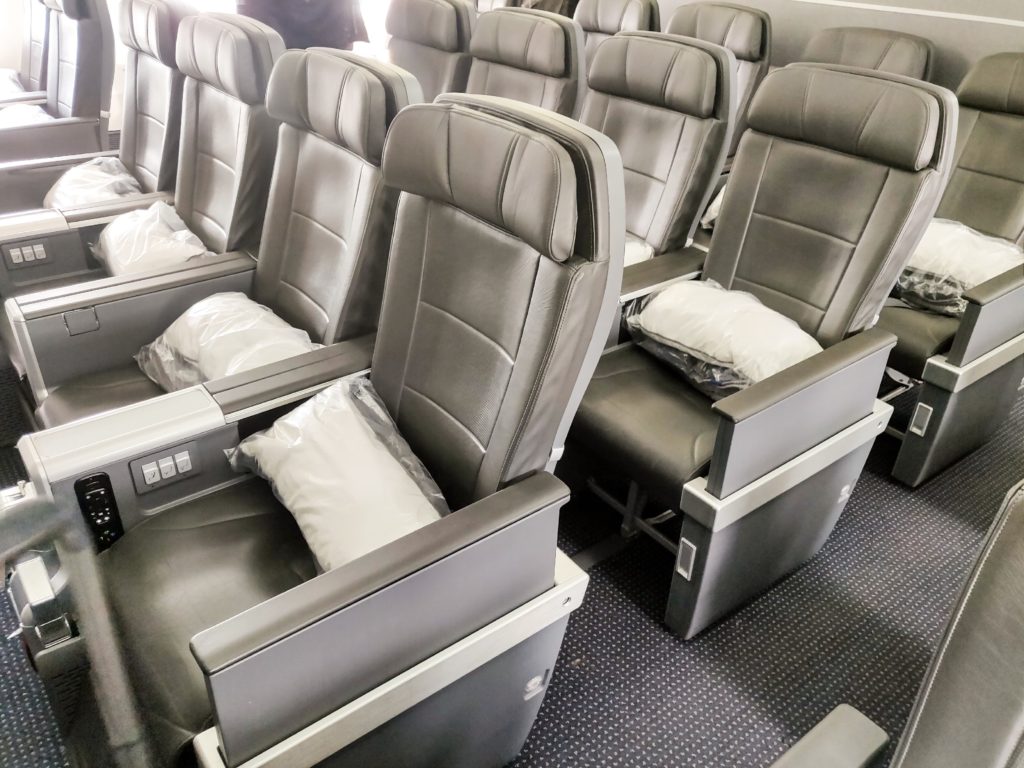
AA Premium Economy Photo: Modhop
Final Verdict: Use the Math, Trust Your Gut
Premium economy is a bridge between the grueling reality of coach and the unattainable luxury of business class. It exists for people who want to feel like a human being without spending their entire life savings. But because it sits in that middle ground, it’s also the easiest place for airlines to overcharge you.
Next time you see that upgrade offer, don’t just look at the total. Pull out your phone, run the PPH formula, and check it against the Modhop Thresholds section above. If the math checks out and you can still afford a few decent meals when you land, go for it. And if you’re still wondering whether premium economy is worth it, the answer is: it is when the PPH makes sense for your flight and your body. Life is too short to have your knees touching your chin for eight hours if you don’t have to.
FAQ
Is premium economy worth it for a 10-hour flight?
Yes, it is often the sweet spot for long-haul travel. If the upgrade costs under $500 (following our $50/hr rule), the extra legroom and better rest significantly reduce arrival fatigue. It turns a grueling day of travel into a manageable experience where you can actually hit the ground running.
What is the difference between economy and premium economy?
You’re paying for a separate cabin with wider seats, 5-8 inches of extra legroom, and deeper recline. You also typically get priority boarding, an upgraded meal service, and a better baggage allowance. It feels more like domestic first class than standard coach.
How much more does premium economy cost than economy?
On average, you can expect to pay between 40% and 100% more than a standard economy fare. Prices vary based on how far in advance you book and how empty the cabin is. Last-minute app upgrades are often where you find the best deals that hit our “Must-Buy” threshold.
Can you use miles or points to upgrade to premium economy?
Absolutely, and it is often a great use of “low-balance” points. Before you pull the trigger, multiply your miles by your personal cents-per-point value (usually 1.5 cents) to see the effective cash cost. Then, run that number through the PPH formula to see if it’s a true deal.
Does premium economy include airport lounge access?
Most airlines do not include lounge access with a premium economy ticket, as they save that perk for business and first class. However, some boutique carriers or specific routes might offer it as a paid add-on. If the lounge is your main goal, you’re usually better off with a dedicated travel credit card.
Join the Conversation
What’s the best premium economy deal you’ve ever scored (cash, points, or a spicy last-minute bid)? And did it actually feel worth it when you landed?
Modhop Founder Jake Redman brings years of global exploration and travel tips to the podcast and our videos at Modhop. Jake also produces audio branding for several music channels on SiriusXM.
By the Modhop Editorial Team (Based on 500+ premium flights reviewed) If you’re flying business class for the first time, you’re about to realize that the front of the plane is […]















Post comments
This post currently has no comments.