Is the Air New Zealand Skynest worth it? For me, the answer is personal. I once spent 30-something hours on an itinerary to Thailand before I learned how to book flights without nightmare layovers. By that final segment, I was sleeping uncharacteristically upright and would have paid almost anything for a cozy spot that wasn’t an empty middle row. On May 18, bookings opened for the Skynest pods, meaning that “sleep in economy” dream is no longer just PR wallpaper. It’s real. And if you’re staring down 17 hours from New York to Auckland, real matters.
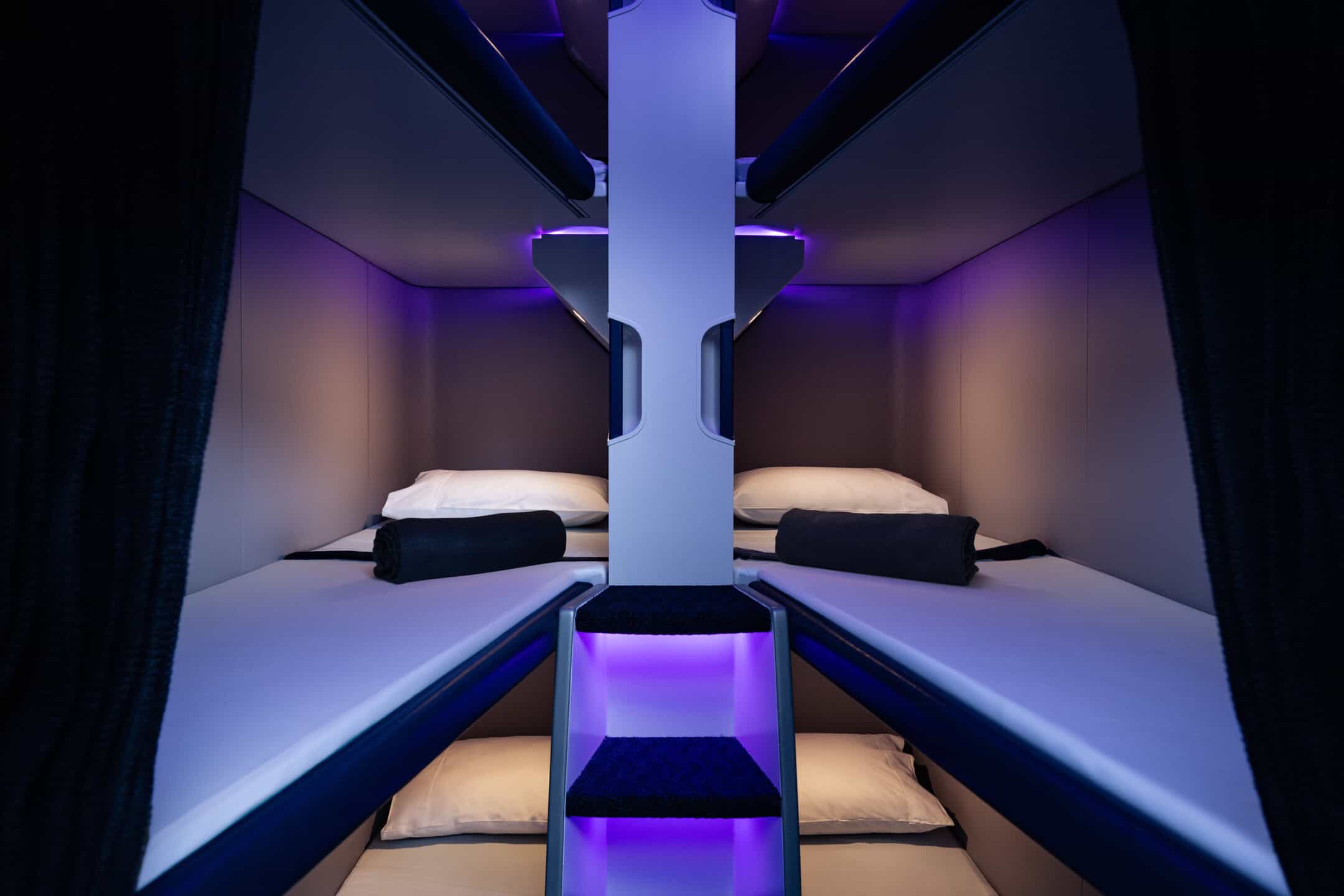
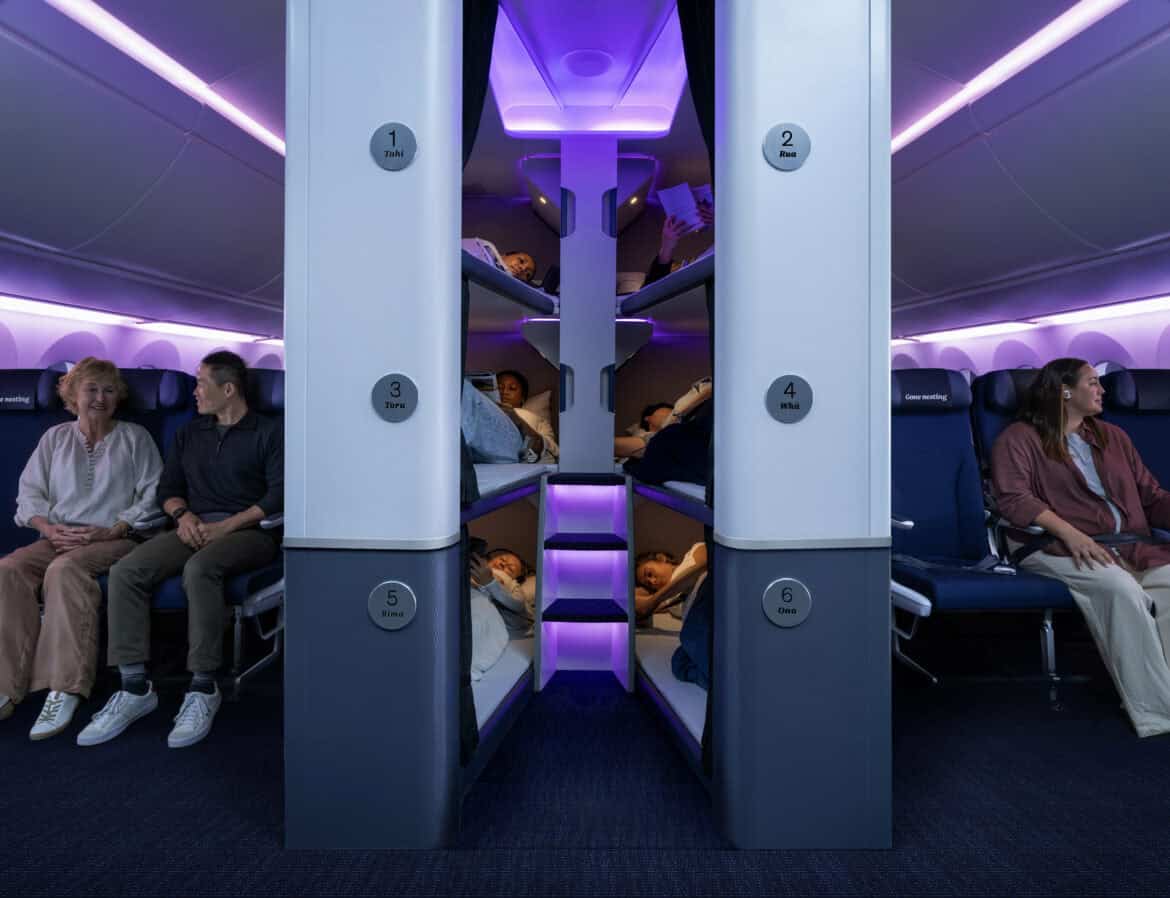
The product is called the Economy Skynest, and it’s basically Air New Zealand carving out a tiny sleep zone in the back of the plane for people who did not buy a premium cabin ticket. There are six pods total, and with two four-hour sessions per flight, that means a maximum of 12 people get access on each run. They’re lie-flat. They come with bedding, ventilation, a privacy curtain, and what Air New Zealand calls a “Nestcessities” kit that includes earplugs and an eye mask. That last name is a little corny, but fine. If it helps me not arrive in Auckland looking like a haunted carry-on, I can live with the branding.
This is not your seat turning into a bed.
A quick hop into your Skynest Pod from your economy seat. Photo: Air New Zealand
It’s an add-on to your regular economy ticket, and after your session ends, you go right back to your regular economy seat with its roughly 31-inch pitch and its familiar posture of managed discomfort. That trade-off is the whole story.
The annoying part is where these pods sit: near the lavatories. So yes, there’s a real lavatory tax here. If you’re sensitive to foot traffic, door noise, or that weird line-forming energy people bring to long-haul bathrooms, that belongs in the value equation too.
Modhop Splurge Math
Here’s the number that matters: a four-hour Economy Skynest session costs ~$283 USD (NZ$495) on the launch route, according to Air New Zealand’s official Economy Skynest page. Modhop’s Price Per Hour formula: take the total upgrade cost, divide by flight hours, and you get a number you can actually make a decision with. I’ve run Splurge Math on enough long-haul upgrades to know when the numbers are doing marketing work and when they’re doing real work. So I ran it through the Modhop filter. Price Per Hour, or PPH.
~$283 / 4 hours = ~$71 per hour for lie-flat time.
That is expensive for a nap. It is also way cheaper than buying your way into a better cabin on this route. A Premium Economy upgrade on New York to Auckland can easily run another $800 to $1,200 or more, depending on the date, fare bucket, and how badly the airline thinks you want your knees to survive. Spread over the full flight, that can look more efficient on paper. But paper is not sleep.
And that’s where PPH gets useful. Premium Economy is often the cheaper hourly move if you’re measuring comfort across the whole trip. The Skynest is the more surgical move if what you actually need is a block of horizontal rest. Not “more recline.” Not “a nicer footrest.” Flat. Out cold, hopefully.
Four hours is also not random. That’s enough time for a real reset if you’re someone who can actually sleep once horizontal. Maybe not the sleep of the innocent. But actual sleep. It’s also enough time to cover a couple of full sleep cycles, which is why this feels more useful than a quick reclined doze in a regular seat.
The Comparison
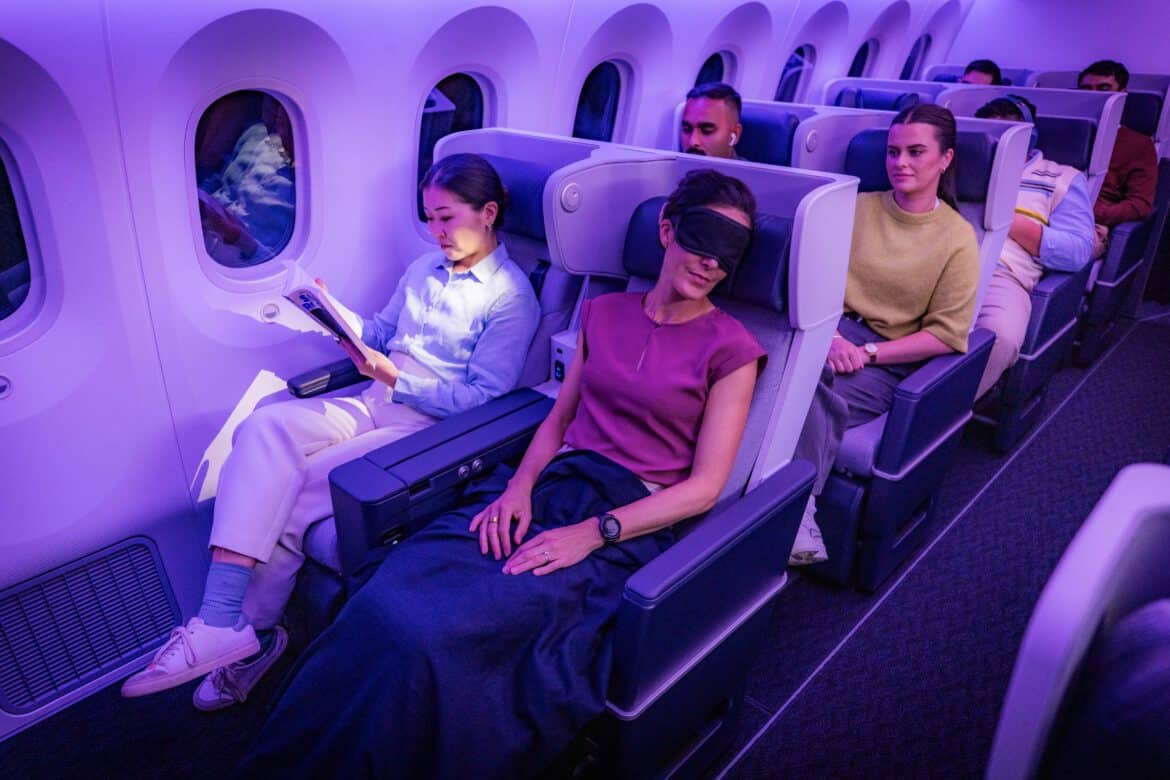
This is the trade-off, named directly: with Premium Economy, you’re buying a better version of the whole 17-hour experience. You get more legroom, a wider seat, upgraded food, and less of that shoulder-to-stranger diplomacy that regular economy requires. You stay in your seat the whole time, and your whole trip gets less annoying.
Air New Zealand’s own Skycouch sits in the middle of this conversation too. That’s the airline’s economy-row setup where a bank of seats converts into a flatter lounging space, and it’s usually more about stretching out than getting a true bunk-style sleep setup.
A solid upgrade, for sure. But even in premium economy, you’re in for upright sleep. Photo: Air New Zealand
With Skynest, you’re buying one sharp spike of relief in the middle of a long slog. For four hours, you get the thing economy never gives you: a real bed. Then it ends. And you head back to your regular seat for the other 13 hours like the flight just reminded you who’s in charge.
So which is better? Compared with Skycouch, Skynest is more purpose-built for actual sleep — but it’s also scarcer. Twelve people per flight, total.
If you care most about personal space for the entire flight, Premium Economy wins pretty easily. It’s more consistent. Less awkward. Probably better if you like to settle in once and not move your stuff around at some assigned sleep-pod time.
But if you cannot sleep sitting up, this gets interesting fast. Premium Economy is still a seat. A better seat, sure. Still a seat. The Economy Skynest is the only thing here that changes the category from “improved sitting” to “actual sleeping.” That difference is not subtle.
If you get the choice, aim for the bottom bunk. It’s cozier and doesn’t require the awkward ladder climb.
And honestly, if you’re already in triage mode trying to invest in your sanity, paying for four hours horizontal may be the smarter buy than paying much more to be mildly less miserable for the full flight.
The Stack: Premium Economy + Skynest
Yes, you can stack both. Air New Zealand allows Premium Economy passengers to book Skynest, which means you can buy a better seat for the full 17 hours and add a dedicated four-hour lie-flat block on top. At current pricing, that combination runs roughly $1,100–$1,500 over the base economy fare depending on when you book — always verify at booking. Business Class on this route typically starts higher. So the stack isn’t cheap, but it’s the closest thing to a business-class sleep experience at a non-business-class price. For the occasional upgrader who can’t stomach economy but won’t pay full-flat prices, it’s worth running the numbers before you dismiss it.
Verdict
My verdict through the Occasional Upgrader lens: the Economy Skynest is worth it if sleep is your breaking point.
If you’re the kind of traveler who can doze upright, keep your wallet in your pocket. Premium Economy probably gives you more overall value if you can stretch for it, and regular economy plus a neck pillow plus low expectations may be enough if you can’t.
But if you’re someone who does not sleep in a seat, full stop, then ~$71 per hour for real lie-flat rest is a steal compared with landing like a zombie and losing your first day on the ground. That’s the part I keep coming back to. The Skynest is not “cheap.” It is targeted. Very targeted.
So no, I don’t think this is for everyone.
There is one catch: timing anxiety. If you spend your economy time fighting catnaps only to find yourself wide awake when your pod-time finally starts, the math stops working. That unpredictability is the gamble. You have to be able to sleep on command, or you’re just paying $71 an hour to stare at a very close ceiling.
I think it’s for the traveler who knows the exact hour their body stops cooperating on a long-haul flight. If that’s you, the math works. If what you want is personal space, better service, and less friction for all 17 hours, Premium Economy still wins.
FAQ
Is Air New Zealand Skynest worth it?
If sleep is your breaking point on a long-haul economy flight, yes — the Skynest can be worth it because it buys you four actual lie-flat hours instead of 17 hours of trying to negotiate with a seat. If you already sleep fine upright, the math gets a lot less convincing.
Is Skynest better than upgrading to Premium Economy?
It depends on what you want to fix. Premium Economy improves the whole flight, while Skynest gives you one concentrated block of real horizontal rest. If you want comfort for 17 hours, Premium Economy wins. If you want actual sleep and can live with going back to economy after, Skynest has a stronger case.
Can I book more than one session?
No. Air New Zealand is limiting Skynest bookings to one session per passenger, which makes sense when there are only six pods and two sessions, so a maximum of 12 people can use it per flight.
Do I keep my economy seat?
Yes. The Economy Skynest is an add-on, not a replacement for your seat. You still fly in your booked economy seat before and after your pod session.
What’s included?
You get full bedding, ventilation, a privacy setup, and the airline’s “Nestcessities” kit, which includes earplugs and an eye mask.
When does it launch?
Air New Zealand says the Economy Skynest is expected to launch in late December 2026, starting on aircraft serving the New York to Auckland route.
Join the Conversation
Would you pay about $283 for four hours of lie-flat sleep, or would you rather put that money toward Premium Economy and make the whole flight a little less bad? Drop your answer in the comments. I’m curious where your personal breaking point is.
SEO Details:
Focus Keyword: air new zealand skynest worth it
SEO Title: Air New Zealand Skynest: Is It Worth It for Economy Travelers?
Meta Description: Air New Zealand’s Skynest sleep pods cost ~$283 for four hours lie-flat in economy. We ran the Splurge Math — here’s whether $71/hr beats a Premium Economy upgrade.
URL Slug: air-new-zealand-skynest-worth-it
Suggested Alt Text for Images:
Hero Image: Six Air New Zealand Economy Skynest sleep pods with white bedding and lie-flat bunks inside a 787 cabin.
Comparison Graphic: Air New Zealand Skynest splurge math showing ~$283 for 4 hours of lie-flat rest versus an $800-$1,200 Premium Economy upgrade for the full flight.
Modhop Founder Jake Redman brings years of global exploration and travel tips to the podcast and our videos at Modhop. Jake also produces audio branding for several music channels on SiriusXM.
DFW was a mess. Total mayhem. Severe thunderstorms in North Texas turned the airport into a parking lot over Memorial Day, with FAA ground stops making a bad situation even […]










Post comments
This post currently has no comments.