Remember the good old days when checking a bag was just a routine annoyance? You’d shuffle to the kiosk, print a tag, and swipe for thirty bucks…or maybe thirty-five if the airline was feeling spicy. It was the price of admission for bringing more than a swimsuit and a laptop. Well, welcome to April 2026, where that routine chore has officially transformed into a mid-tier luxury.
As of this past week, the “Big Three” US carriers plus Southwest have effectively settled on what we’re calling the $45 Standard for a first checked bag when you prepay online. That’s the key distinction. Delta, United, American, and Southwest are all sitting at $45 in that prepaid lane, while JetBlue and Alaska still vary a bit depending on timing or fare rules. It’s a bold new world where dropping half a Benjamin just to see your suitcase at the other end of the carousel feels less like a service fee and more like a splurge. If you’re feeling the pinch, you’re not alone. The recent wave of airline baggage fees 2026 has hit the industry hard, driven by rising fuel costs and a global shift in how airlines squeeze revenue out of the “back of the bus.”
The Verdict: In 2026, the $45 checked bag fee is the new “freedom tax.” Unless you hold a co-branded credit card or have reached a higher status tier, checking a bag now costs more than a decent airport meal and a drink combined. If you want to avoid the carry-on hunger games, you’re going to have to pay for the privilege or play the credit card shield game.
The sudden jump wasn’t entirely unexpected, but the timing felt like a coordinated strike on our wallets. Within a single week, Delta, United, American, Southwest, and Alaska all moved into the same ugly conversation, while JetBlue kept doing its own slightly more chaotic seasonal thing. Southwest, of course, is the part that still feels personal. The airline ended “Bags Fly Free” for its lowest fares back in May 2025, when it started charging $35 and replaced “Wanna Get Away” with Basic fares. So the April 2026 move isn’t the beginning of the betrayal. It’s the sequel: a $10 hike that takes that first bag to $45 and rubs a little more salt in the wound.
The reasoning from the C-suite isn’t surprising: jet fuel prices are up roughly 85% since the start of the U.S.-Iran conflict in February, according to Argus data, and labor costs aren’t getting any cheaper. But for those of us standing in line at the terminal, it just feels like the price of “not dealing with it” has gone up.
The 2026 Baggage Fee Comparison Table
To help you navigate this new landscape, we’ve put together the current data for the major players. Prices listed are for standard domestic economy base fares, with both prepaid and airport pricing where it matters.
Airline
First Bag (Prepaid Online)
First Bag (Airport)
Effective Date
Delta
$45
$45
April 8, 2026
United
$45
$50
April 3, 2026
American
$45
$50
April 9, 2026
Southwest
$45
$45
April 9, 2026
JetBlue
$39 (off-peak) / $49 (peak)
+$10 within 24 hrs of departure
March 30, 2026
Alaska
$40
$40
April 10, 2026
Prices reflect first checked bag, standard domestic economy, base fare. Elite status, co-branded credit cards, and premium cabin passengers may qualify for free bags.
The headline here is that American isn’t actually the outlier at $50 across the board. That higher number applies at the airport. If you prepay online, American slots right into the same $45 standard as Delta, United, and Southwest. Alaska also deserves a spot in this fee-wave conversation, even if it’s sitting slightly lower at $40 instead of joining the full forty-five-dollar circus. Speaking of which, if you are planning a trip during the madness, you might want to check out our guide on how to make holiday travel less awful.
The Southwest Shock: A Moment of Silence
Let’s talk about the Southwest checked bag fee. For years, Southwest used their “Bags Fly Free” slogan as a blunt-force weapon against their competitors. It was the great equalizer. You could find a cheaper fare on a ULCC, but once you added the bag, Southwest won.
That’s why, to the Southwest loyalists I’ve talked to, this still lands as a betrayal and not just a pricing update. Southwest already broke with tradition in May 2025 when it killed free checked bags on its lowest fares, swapped out “Wanna Get Away” for Basic, and started charging $35. The April 2026 change is the extra twist of the knife: now that same first bag costs $45. While higher fare tiers still keep more of the old Southwest logic, the casual traveler chasing the lowest price is now staring at the same pack-light-or-pay-up math as everyone else. It’s a shift that changes the equation for family vacations, weekend trips, and anybody who picked Southwest specifically to avoid this exact nonsense.
Modhop Splurge Math: The “Price Per Hour” of Freedom
I like to look at these things through the lens of the “Occasional Upgrader.” We aren’t all mileage millionaires, but appreciate comfort when it’s worth the spend. So, let’s look at the math for a standard 4-hour domestic flight.
If you pay $45 to check your bag, you are essentially paying $11.25 per hour for the following luxuries:
The Aisle Walk of Shame: Not being the person holding up the entire boarding process while trying to jam an oversized “personal item” into a full overhead bin.
The Middle Seat Pivot: Not having a heavy backpack crammed under the seat in front of you, effectively turning your limited legroom into a cramped foot-well.
The Pre-Flight Pint: The ability to walk straight to the gate (or the Delta Sky Club at LAX) without hauling a 25-pound roller-bag behind you like a ball and chain.
When you break it down to $11 an hour, checking a bag feels less like a ripoff and more like a low-cost upgrade to your sanity. If you’ve ever watched our Delta A321 seating video, you know that space is at a premium. Paying for that space: by moving your bag to the belly of the plane: is the new luxury splurge.
Jake uses his United Explorer Card to book and avoid fees and STILL stuffs his carryon. Photo: Modhop
The Carry-On Hunger Games
The natural result of these airline baggage fees in 2026 is that everyone and their grandmammy is now trying to bring a “carry-on” that is roughly the size of a small refrigerator. We’ve all seen it: the gate agent desperately pleading for volunteers to check bags because “we are on a completely full flight today.”
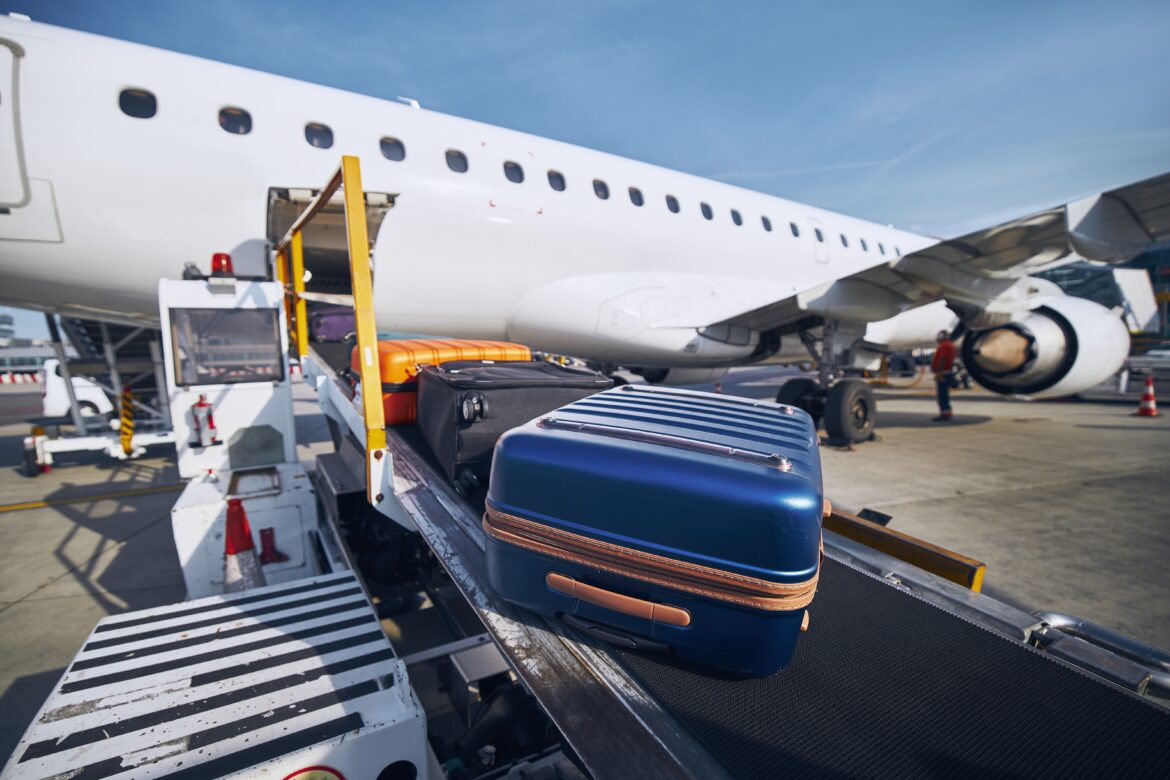
This is where the $45 fee creates a paradox. By charging so much to check a bag, the airlines have made the boarding process a chaotic scramble for bin space. If you decide not to pay the fee, you are entering the Hunger Games. You better hope your boarding group is called early because if the overhead bins fill up before you board, you’re getting gate-checked anyway, only after the stress of hunting for a spot. To be fair, gate-checking isn’t always the worst outcome. On most flights, gate-checked bags are returned right to the jetbridge on arrival, which means no carousel wait and a faster exit. The problem is you don’t get to choose that outcome, the airline chooses it for you, usually after you’ve already hauled your bag halfway down the aisle.
The Workaround: The “Credit Card Shield”
If you’re sitting there thinking, “Jake, I’m not paying $90 round-trip just to bring my clothes,” I hear you. This is where the smart traveler leans into the Credit Card Shield. In 2026, the value of a mid-tier airline credit card has effectively doubled.
Most co-branded cards (like the Delta SkyMiles Gold or the United Explorer) carry an annual fee of around $95 to $150. If you fly just twice a year and check a bag each time, the card has paid for itself.
Delta: Holding the SkyMiles card usually gets you (and up to 8 companions) a free first bag.
United: They generally require you to pay for the flight with the card to get the benefit, but it wipes that $45 fee clean.
American: Their Aviator or Select cards offer similar perks, often including earlier boarding access (check your specific card benefit for current group assignment) so you actually get overhead space if you do choose to carry on.
For those who prefer a little more luxury without the bag-drag, you might find that the money saved on fees could be better spent on airport lounge access or even a cheap upgrade to Virgin Atlantic Premium Economy where bags are usually included.
We did the splurge math to find the best cards to use for bags in 2026. Photo: Modhop
Is it Ever Worth It?
The “Occasional Upgrader” move is to check the bag when the trip matters. If you’re heading to a wedding and have a suit or a dress that shouldn’t be folded into a tiny cube, pay the $45. If you’re going on a 10-day trip and don’t want to do laundry in a hotel sink, pay the $45.
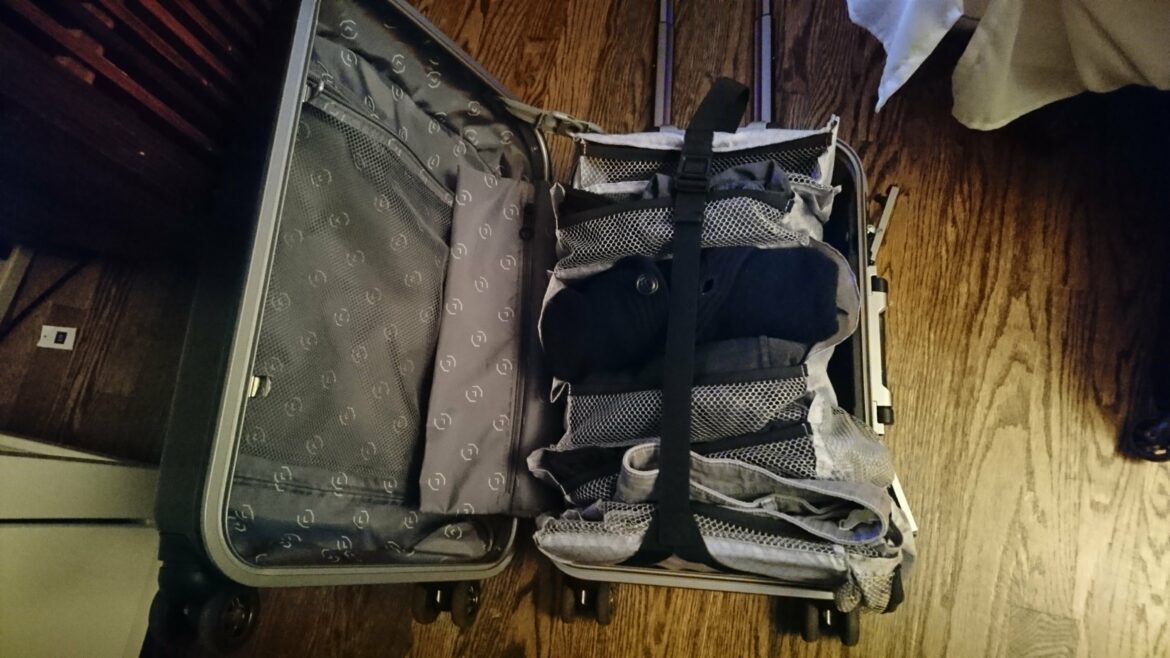
However, if it’s a quick two-day business trip, the $45 fee is a challenge. It’s an invitation to refine your packing game — or to do the math on whether Frontier or Breeze can beat the full-fare total even after bag fees. Sometimes the ULCC still wins on short hops.
Final Thoughts on the $45 Standard
The airline industry has a funny way of making us pay for things we used to take for granted. First, it was the meals, then the legroom, and now the very act of bringing luggage. While the $45 fee feels like a gut punch, it’s also a reminder that the way we travel is evolving.
We are moving toward a more “unbundled” experience where the seat is just the beginning. Whether you choose to pay the “freedom tax” or fight it out in the overhead bins, knowing the landscape is half the battle. Just remember: if you decide to check that bag, you’re not just paying for transport: you’re paying for the luxury of walking through the terminal with nothing but your phone and a sense of calm.
FAQ: Airline Baggage Fees 2026
Which airlines now charge $45 for a checked bag?
As of April 2026, Delta, United, American, and Southwest all charge $45 for the first checked bag on domestic economy fares when prepaid online.
Does Southwest still offer free checked bags?
No. Southwest ended “Bags Fly Free” for its lowest fare classes in May 2025. As of April 9, 2026, that fee has increased to $45.
Is it cheaper to pay for my bag at the airport?
Actually, it’s more expensive on some carriers. American and United both charge a $5 premium ($50 total) if you wait until you get to the airport to pay.
How can I avoid these new $45 baggage fees?
The most effective way is holding a co-branded airline credit card, which usually waives the fee for the cardholder and companions. Elite status and booking Premium Economy or Business Class also include free bags.
Why are baggage fees increasing so much in 2026?
Airlines attribute the hike to a roughly 85% increase in jet fuel costs following the start of the U.S.-Iran conflict, alongside rising labor and operational expenses.
Join the Conversation
How are you handling the 2026 baggage fee hikes? Have you officially given up on Southwest now that the first bag isn’t free, or are you doubling down on travel credit cards to dodge the fees? Share your best packing tips or your most expensive “baggage fee horror story” in the comments below: we want to hear how you’re gaming the system!
Modhop Founder Jake Redman brings years of global exploration and travel tips to the podcast and our videos at Modhop. Jake also produces audio branding for several music channels on SiriusXM.
Alaska Airlines Europe flights 2026 are almost here, and this is a pretty big deal for a carrier that built its reputation on the West Coast, Alaska milk runs, and […]













Post comments
This post currently has no comments.