For a long time, transcon flying has been a silly little game of extremes. You either accept six hours of coach-mode misery, or you pay Polaris money and pretend it’s affordable because you get a rem-less nap. United’s new Coastliner “Premium Plus” (their brand name for premium economy) is expected to create a middle lane that doesn’t feel like a compromise.
Verdict: Yes, upgrading to premium economy on United Coastliner looks worth it for a lot of transcontinental travelers, especially digital nomads and “Occasional Upgraders” (travelers who splurge selectively on a handful of meaningful upgrades per year, rather than flying premium by default) who want a productive cabin without the full Polaris price jump. If you’ve been thinking about upgrading to premium economy but usually talk yourself out of it, this may be one of the cleaner cases for doing it in 2026. The seat should be better, the cabin should be calmer, and the Wi-Fi may be the thing that turns this from a nice-to-have into a genuinely useful upgrade.
Based on what United has announced so far, it’s likely yes.
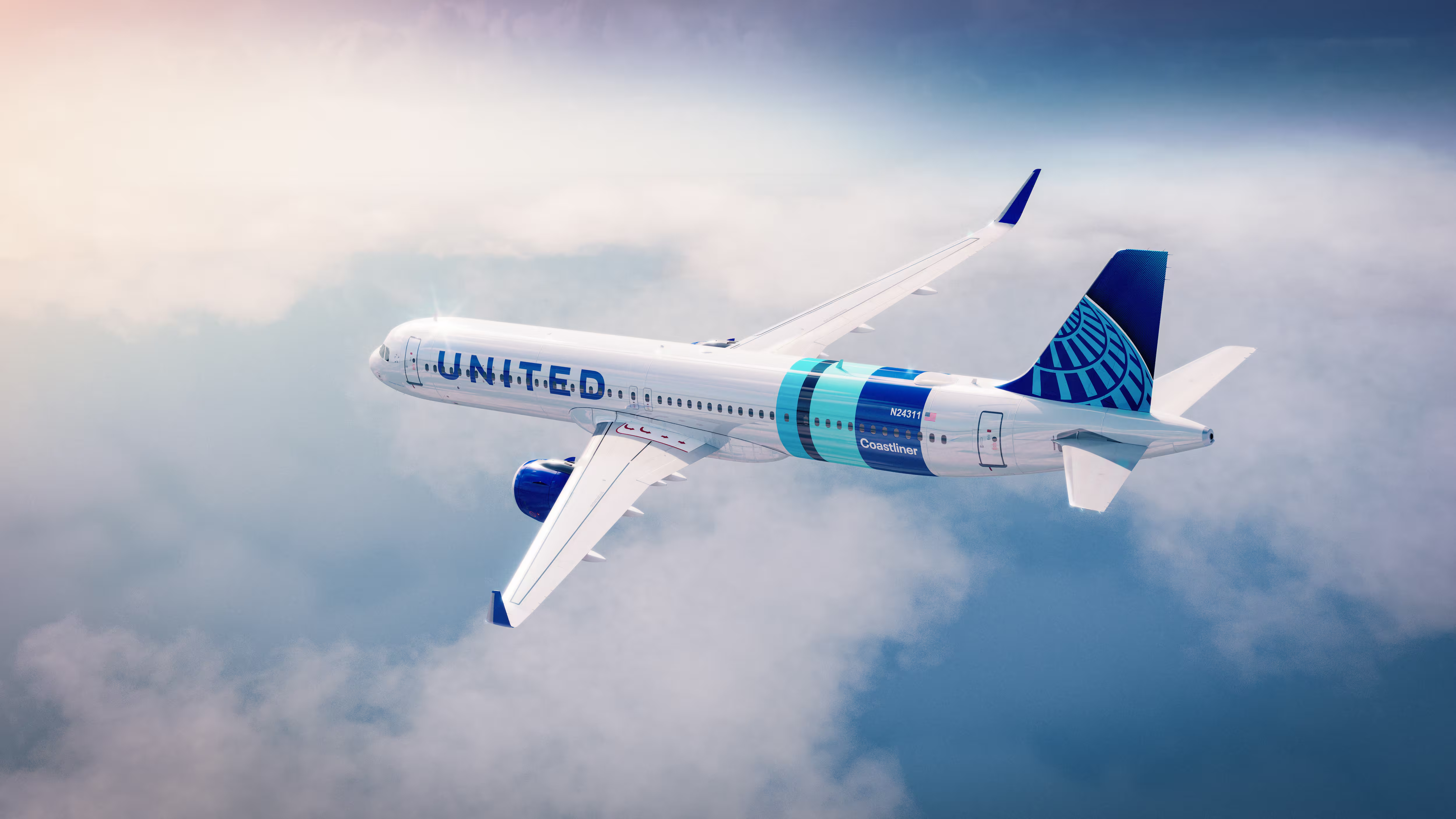
The big reason: United is bringing its proper Premium Plus seat to a single-aisle Airbus A321neo and that’s kind of the big deal here. Instead of the usual domestic setup where “premium” means a slightly wider recliner and a meal that may or may not justify its own existence, Coastliner is expected to feature a true premium economy seat with a footrest, more recline, and a cabin that should feel meaningfully more relaxed.
Modhop Splurge Math™
Splurge Math: modhop’s simple framework for deciding whether a travel upgrade is actually worth paying for.
PPH (Price Per Hour): the cost of the upgrade divided by the number of hours you’ll actually use it.
Take the upgrade cost and divide it by the hours you’ll actually use it.
On Newark (EWR) to San Francisco (SFO), you’re looking at roughly 6 hours in the air. If a Premium Plus upgrade lands around $250 as a hypothetical estimate for this Splurge Math example, your math looks like this:
$250 / 6 hours = about $41/hour.
That lands in our Strong Buy zone because it’s under $50 an hour. And unlike some upgrades, you’re not paying for a vague feeling of status. You’d be paying for six hours of better posture, more space, easier working conditions, and less cabin chaos. That’s not nothing. That’s the whole point.
On the other hand, using a current real-world example, I have a transcon between Newark and Los Angeles later this week. As I write this, a paid upgrade to the current version of Premium Plus is $1029. The Splurge Math is more of a hard ‘no way’ there. I’ll wait to see if my $250 + miles wait-list upgrade clears.
If you want the broader philosophy behind when an upgrade is smart versus when it’s just travel cosplay, our affordable luxury travel tips break that down without the usual internet chest-puffing.
Photo: United
To me, the layout is a big part of the appeal. The 2-2 configuration on a narrowbody should feel more private than the usual domestic setup. There will only be 12 seats in the Premium Plus cabin, tucked behind Polaris, so the whole thing is expected to feel calmer nestled into a cozier space. For anyone upgrading to premium economy because they want space to work, snack, breathe, or just not get shoulder-checked by the beverage cart all flight, this looks like the sweet spot.
Why It May Feel Better Than “Domestic First”
This is where the Coastliner gets sneaky good.
A lot of domestic first class can feel like a trap. You pay more, you get a bigger seat, maybe a meal, and then you feel a little cheated when you realize that’s the whole updrade. (It’s especially painful to me when I impulsively upgrade before realizing we’re just getting the ol’ snack basket.) Premium Plus on the Coastliner looks different because the hard product should be doing some real work.
United is expected to install its international-style Premium Plus seat on the A321neo, marking the first time the airline has put this seat on a single-aisle plane. That alone makes it stand out. Add in the footrest, calf support, and more substantial seat shell, and it starts looking less like “fancy domestic” and more like a useful middle ground between coach and Polaris.
Starlink Wi-Fi: Why It Makes Premium Economy Worth It on Transcon Flights
Honestly, the seat is only half the story.
The real flex here may be Starlink Wi-Fi. And yes, that sounds like a line that should come from someone wearing an airline-branded quarter zip, but it matters. If you’re the kind of traveler who needs to answer Slack, upload files, or jump on a video call somewhere over the Rockies, this is where the Coastliner could start justifying itself fast.
For digital nomads, remote workers, and anyone treating a flight like a backup workday, this is the “office in the sky” angle. If the connection performs the way Starlink branding suggests, that’s not a small detail. It’s the difference between arriving caught up and arriving annoyed.
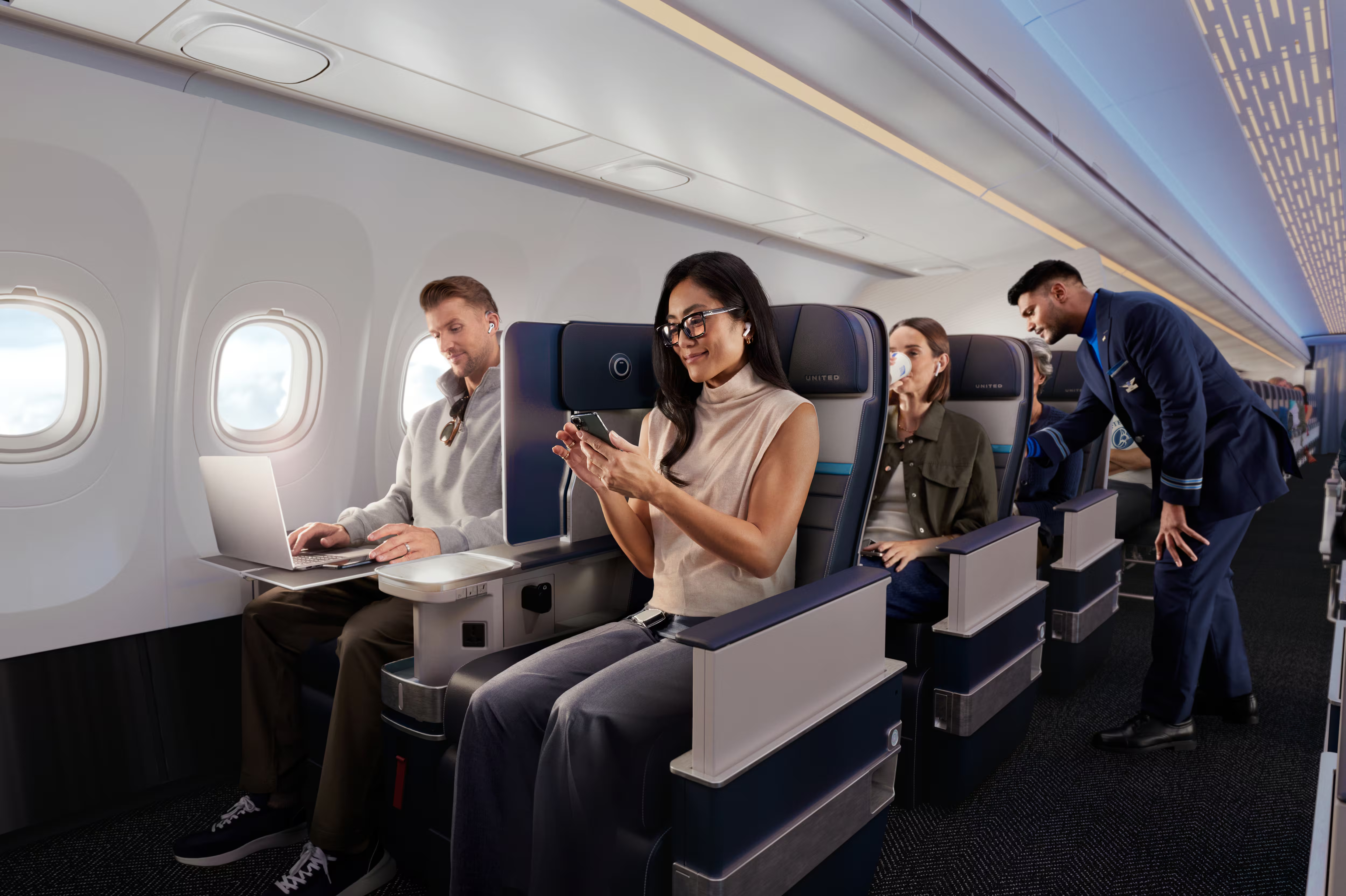
Premium Plus (Premium Economy) aboard United Coastliner Photo: United
Pair that with the bigger tray table and power at your seat, and upgrading to premium economy starts looking less like a splurge and more like buying back six usable hours of your life.
The Self-Serve Snack Bar: A Small Perk That Actually Matters
One of the best parts of this setup may also be one of the least glamorous: the rear walk-up snack bar.
Important clarification here: this is expected to be a perk for the broader cabin experience, not a Premium Plus exclusive. Still, that doesn’t make it irrelevant for Premium Plus passengers. It matters because on a six-hour transcon, being able to get up and grab a snack or non-alcoholic drink without waiting on cart timing is genuinely useful.
It sounds minor until you’re thirsty, the cart is nowhere in sight, and you realize being able to fix that yourself is deeply underrated. That little self-serve setup should make the cabin feel more human. Less waiting. Less awkward hovering. Less hoping the second drink pass actually happens.
On a long narrowbody transcon, that stuff matters more than airlines like to admit.
United Premium Plus vs. Polaris
This is also where the mid-tier trade-off gets very clear. United’s Coastliner will bring something genuinely new to these routes: Polaris passengers are expected to get United Polaris Lounge access on eligible domestic Coastliner flights, which is a first for this kind of domestic service. Premium Plus passengers, however, should not expect that lounge access.
That sounds obvious until you remember how often airlines love to blur the lines in marketing copy. So here’s the clean version: Premium Plus should give you a noticeably better onboard seat and cabin than regular economy, but it will not give you the full ground experience that Polaris gets. If you care most about sleeping flat, lounge access, and the whole “airport buffer from chaos” thing, Polaris will still be the top-tier option. If you care more about getting a materially better seat without jumping to business-class pricing, Premium Plus remains the smarter middle move.
Competitive Context: How Coastliner Stacks Up
United isn’t launching Coastliner into a vacuum. American is already pushing its A321XLR premium transcon strategy, with a similar idea of using a narrowbody to carry a more serious premium product across competitive coast-to-coast routes. In practical terms, that means Coastliner won’t win just by existing. United has noted that more than 10,000 passengers per day travel between its West Coast hubs and Newark, many connecting onward to international flights—making this one of the highest-yield domestic corridors in the country.
American’s A321XLR is built around lie-flat Flagship Suites up front and a 12-seat premium economy cabin, so on paper it’s playing a similar game. The difference is that United’s angle looks more balanced for travelers who are specifically debating upgrading to premium economy, not just dreaming about the pointy end of the plane. Coastliner’s Starlink pitch and Premium Plus-on-a-narrowbody novelty make it especially interesting for people who value productivity over pure seat theatrics. And if you want a more opinionated industry read, One Mile at a Time’s coverage of American’s A321XLR business class is worth a look.
Delta’s premium A321neo transcon story has been complicated by seat certification delays, with some planes parked well into 2026. The result is a less clearly defined premium narrowbody offer compared to what United is bringing with Coastliner.
So, Who Should Actually Pay for This?
If you’re the person who can grind through six hours in coach with a smile and a neck pillow from 2018, congrats, you’re built different. For everyone else, this looks aimed squarely at travelers who want a more productive, less draining flight without jumping to Polaris pricing.
That includes digital nomads, business travelers paying out of pocket, and the “Occasional Upgrader” who wants one strategic splurge that changes the whole day. Compared with a standard domestic first class seat on an older 737, Coastliner should feel newer, sharper, and more intentional. The smaller A321neo cabin may also mean faster boarding, faster deplaning, and less widebody chaos for the sake of widebody chaos.
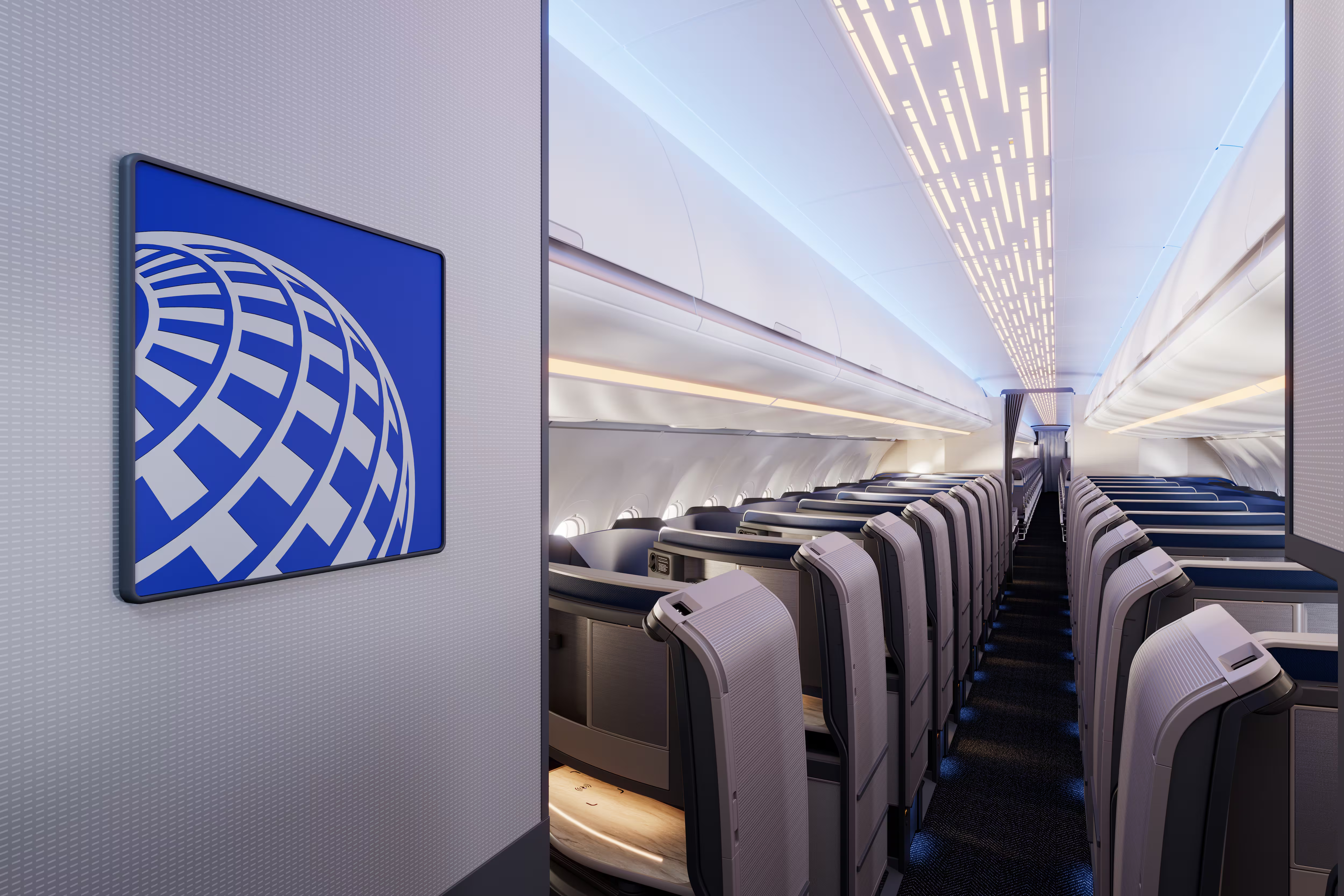
Photo: United
And if you’re already comparing premium cabins across cards, perks, and airline branding games, our take on how Chase is getting flexy with perks is a useful reminder that labels matter less than the actual experience.
Final Thoughts for the Occasional Upgrader
The United Coastliner Premium Plus looks compelling because it solves a very normal problem: you want a better transcon flight, but not $2,000 better. If United delivers what it has previewed, this should offer a calmer cabin, a genuinely useful seat, real productivity upside, and enough little quality-of-life wins to make the math make sense.
So, is it worth upgrading to premium economy here? Based on the early details, yes. If the upgrade lands in that roughly $250 hypothetical range on a six-hour EWR-SFO run, it looks like one of the easier “Strong Buy” calls in domestic flying right now. Not because it’s flashy. Because it’s useful. Which, frankly, is better.
For the official details on the rollout, you can read United’s Coastliner announcement coverage from One Mile at a Time, which also breaks down the cabin plan and launch timeline.
Frequently Asked Questions
Is United Premium Plus on Coastliner the same as Polaris?
No. Premium Plus is United’s premium economy product, while Polaris is the airline’s business-class product with lie-flat seating and lounge access on these Coastliner routes.
Do Premium Plus passengers get Polaris Lounge access on United Coastliner?
No. Polaris Lounge access is expected to be reserved for Polaris passengers on eligible Coastliner flights. Premium Plus passengers should see this as the main mid-tier trade-off.
Is the rear snack bar only for Premium Plus?
No. The rear walk-up snack bar is expected to serve the broader cabin, not just Premium Plus passengers.
Why does Starlink Wi-Fi matter so much on transcon flights?
Because on a six-hour flight, reliable Wi-Fi can turn dead time into productive time. For remote workers and digital nomads, that changes the value equation fast.
What does Splurge Math mean?
Splurge Math is modhop’s simple framework for judging whether a travel upgrade is worth the price. It uses PPH, or Price Per Hour, to show how much you’re really paying for the time you’ll spend using the upgrade.
Join the Conversation
Would you pay extra for Premium Plus on a Coastliner flight, or would you either save the money and sit in economy or go all the way to Polaris? Let us know how your own Splurge Math works out in the comments.
Modhop Founder Jake Redman brings years of global exploration and travel tips to the podcast and our videos at Modhop. Jake also produces audio branding for several music channels on SiriusXM.
The Modhop Verdict: Is the digital nomad lifestyle worth the hype? Yes, but only if you stop treating it like a budget vacation. Of all the digital nomad pitfalls the […]













Post comments
This post currently has no comments.