The Modhop Verdict: Is the digital nomad lifestyle worth the hype? Yes, but only if you stop treating it like a budget vacation. Of all the digital nomad pitfalls the real problem isn’t just the cost—it’s the productivity tax you pay when you try to work from a beach chair. Invest in a real desk and a quiet room, and the math actually works.
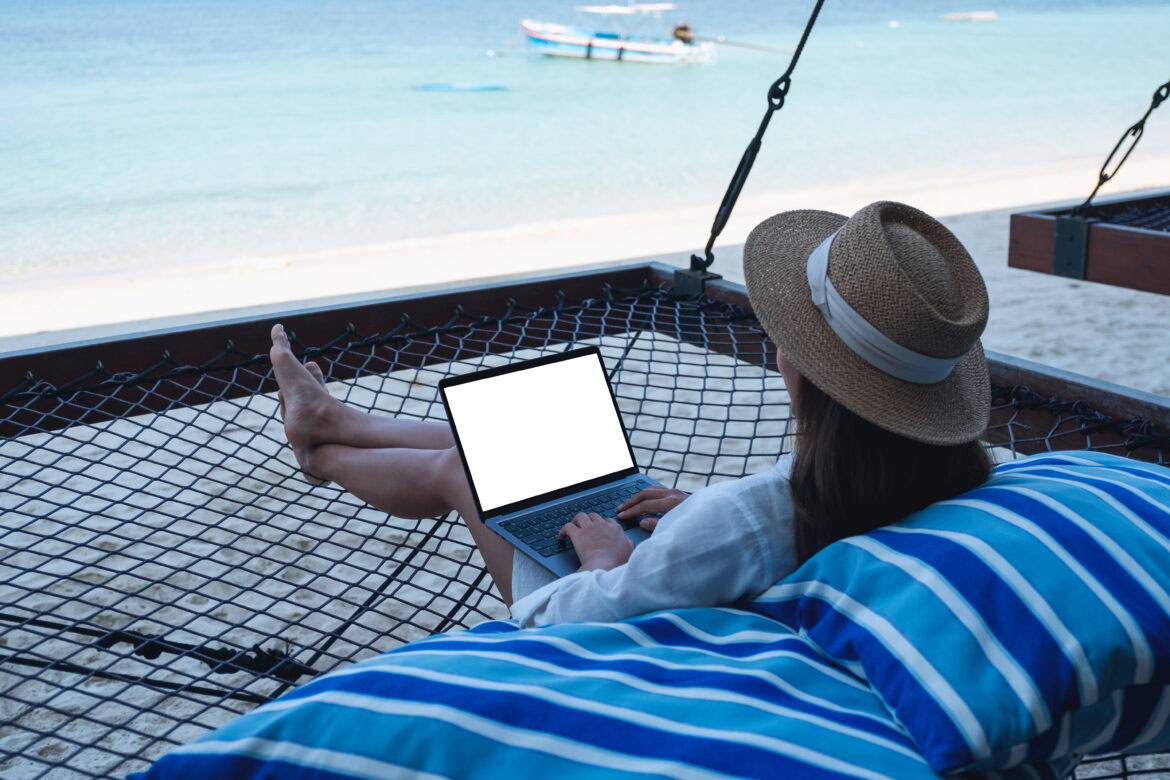
The dream of working from a sun-drenched balcony in Lisbon or a sleek cafe in Tokyo is powerful enough to make anyone want to trade their ergonomic office chair for a backpack and a passport. But if you’ve spent any time actually living the life, you know the “laptop on the beach” image is the biggest lie in travel marketing. Sand gets in the keyboard. The glare makes the screen useless. And your back starts complaining almost immediately. As we move deeper into 2026, the reality of remote work is shifting. There are now an estimated 35 to 40 million digital nomads globally, so this is no longer some fringe experiment for people with suspiciously tidy backpacks. The “Occasional Upgrader” persona, someone who loves the adventure but refuses to suffer through a shared hostel bathroom, is the one actually winning the game.
Navigating the transition from a traditional office to a life on the move requires more than a decent VPN. It takes a strategy to avoid the common traps that turn a dream lifestyle into an exhausting logistical mess. Whether you’re just starting or already refining your routine, these digital nomad lifestyle tips are built to protect your productivity and your sanity while you see the world.
The Workspace Trap: Why Your Bed Isn’t an Office
One of the first pitfalls new nomads fall into is underestimating the importance of a proper workspace. In the beginning, the novelty of working from a hotel bed or a tiny café table feels like freedom. By week three, that novelty is replaced by chronic neck pain and a noticeable dip in your output. For the Occasional Upgrader, the goal isn’t just to be “somewhere else,” but to be effective while being there.
When booking your accommodation, the “work desk” filter is your best friend, but you have to verify it. Many hotels consider a narrow decorative shelf to be a desk. Look for photos that show a chair with a back and enough surface area for a laptop and a second screen if you carry one. If the room looks great but the workspace is lacking, you need to scout the local coworking scene before you land using tools like Coworker.com. A day pass at a high-end coworking space might seem like an unnecessary expense, but when you consider the cost of a lost afternoon due to a spotty connection or a loud neighbor, it becomes an essential investment in your career.
Modhop Splurge Math: The Nomad Productivity Calculator
Let’s sharpen the definition here. Splurge Math is Modhop’s framework for deciding whether an upgrade pays for itself in protected productivity. It’s not about spending more just to feel fancy. It’s about asking whether a better room, a proper desk, stronger WiFi, or a coworking pass saves enough focused work time to justify the extra cost.
There is a common misconception that to make the digital nomad lifestyle work, you need a minimalist, budget-at-all-costs mentality. That’s fine until your back locks up, your Wi-Fi drops mid-call, and your cheapest-bed-in-town strategy starts looking a lot less clever.
Consider the “Nomad Hostel” vs. the “Boutique/Coworking Hybrid” scenario. A bunk in a popular nomad hostel in Medellín might cost you $40 a night. Sounds great until you factor in the distractions, the random roommate who thinks 1:30 AM is the perfect time to repack their entire life, and Wi-Fi that folds the second everyone logs on. Cheap can get expensive fast when it quietly wrecks your workday.
Now compare that with a boutique stay or well-vetted apartment plus a proper coworking setup for about $135 a day total. That’s an extra $95 per day. At a conservative $50 an hour billable rate, you only need to protect about two hours of productive work for the upgrade to make obvious financial sense. If that upgrade saves even one billable hour, or better yet one to two hours of focused work, the math starts working in your favor almost immediately. It also helps prevent the bigger disaster: a missed deadline, a blown client call, or the kind of stress spiral that makes you question the entire remote-work experiment.
For the Occasional Upgrader, this is the whole point. Spend more on the environment so you can protect your output, your sleep, and your spine. The 2026 logistical landscape has changed, especially with the Schengen EES rollout. If border delays or arrival-day chaos already threaten your schedule, your accommodation setup is not the place to get cute and cut corners.
EES and the Digital Nomad: Europe’s New Border Reality in 2026
If your nomad plans involve the Schengen Area or major European hubs, you’re looking at a very real set of hurdles in 2026. The EU Entry/Exit System, or EES, has been fully operational since April 10, 2026. It’s no longer just a quick passport stamp and a “welcome to France.” Travelers now use biometric registration kiosks to capture fingerprints and facial data, and in some airports that process is paired with automated gates rather than replaced by them. The days of casually winging it with your visa-free days are over, because the system is built to track entries, exits, and overstays with far less room for fuzzy math.
That matters for digital nomads because even routine arrivals can take longer than they used to. Border processing times have increased by up to 70% at major hubs as airports adjust to the new flow. And yes, this can get messy in real life, not just in policy PDFs. At Milan Linate, 122 easyJet passengers were reportedly stranded during EES-related disruption, which is exactly the kind of travel-day chaos that turns a tidy work plan into comedy. The official EU overview is worth bookmarking here: EU Entry/Exit System. And this is only part one. ETIAS is expected to arrive in late 2026, which means another pre-travel layer for many non-EU visitors heading into Europe.
Quick Decision Table: Digital Nomad Survival: Desk vs. Beach
| Setup |
Workspace |
Wi-Fi Reliability |
Back Health |
| Real desk in a room or coworking space |
Stable, usable, actually built for work |
Usually predictable and testable |
Your spine sends a thank-you note |
| Beach chair or pool lounger |
Great for photos, terrible for actual output |
Unpredictable at best |
Absolute betrayal by mid-afternoon |
A major pitfall right now is failing to account for the processing times at hubs like Paris Charles de Gaulle (CDG) or Amsterdam Schiphol (AMS). Travelers now have to work through biometric registration kiosks, and in some cases automated gates after that, which can create a very unfun welcome sequence after a long-haul flight. My advice? Don’t schedule anything mission-critical on a travel day. Give yourself a 24-hour buffer to clear customs, find your accommodation, and test the WiFi before your first meeting. And if you want a fuller picture of the mess, our coverage of the Schengen EES rollout breaks down what’s changing. It’s also worth keeping an eye on the broader travel-cost nonsense in our Fee-pocalypse coverage, because border delays have a funny way of turning into extra hotel nights, missed transfers, and other wallet-draining surprises.
Slow Travel Productivity: The Antidote to Burnout
The fastest way to hate the digital nomad lifestyle is to treat it like a three-week vacation that never ends. Moving cities every four days is exhilarating for a fortnight, but it’s unsustainable for a career. Every time you move, you incur a “relocation tax,” meaning the hours lost to packing, transit, check-in friction, grocery runs, and rebuilding your routine from scratch.
The most successful nomads are the ones who embrace “Slow Travel.” They stay in one city for at least a month. This gives you time to build a routine, find your favorite “office,” and actually make friends who aren’t also checking out tomorrow morning. When you slow down, you also save money. Monthly discounts on sites like monthly stay discounts or through local rental agencies can cut your nightly rate by up to 30-50%, effectively paying for those “Occasional Upgrader” perks you crave. In plain English: slow travel productivity is better because it reduces the relocation tax that keeps stealing your time and attention.
Digital Nomad Visas in 2026
If you’re planning to stay put longer and actually work like a functional adult, visa strategy matters. In 2026, a few countries keep showing up on the shortlist for digital nomads because they offer clearer paths for longer stays than the standard Schengen clock. For city-by-city cost of living and remote-work community intel, NomadList.com is still one of the more useful starting points.
| Country |
Visa / Pathway |
Income Benchmark |
Why Nomads Look at It |
| Portugal |
D8 Digital Nomad Visa |
€3,680/month |
Strong infrastructure, good smaller-city options, easier long stays |
| Spain |
Digital Nomad Visa |
€2,849/month |
Lets remote workers stay beyond the standard 90-day Schengen window |
| Thailand |
Remote-worker-friendly long-stay routes vary |
Varies by visa type |
Strong coworking scene, mature nomad hubs, easier daily-life setup |
| Indonesia |
Remote-worker-friendly long-stay routes vary |
Varies by visa type |
Bali remains popular, but rules need close checking before you commit |
Portugal remains a favorite because its digital nomad options are geared toward remote workers who want a legal longer-term base, especially if Lisbon prices have scared them into looking at Porto, Madeira, or smaller cities that still have solid infrastructure. Spain is in the same conversation. Its digital nomad visa has made it easier for remote workers to stay beyond the standard 90 days in Schengen, which is a big deal if you’d rather build a routine than speed-run Europe with a backpack and a caffeine problem.
Outside Europe, Thailand keeps attracting remote workers thanks to its strong nomad hubs, decent coworking ecosystem, and relatively mature support network for people trying to work abroad without reinventing their lives every week. Indonesia, especially Bali, is still in the mix too, though this is where people get a little too relaxed and start assuming vibes count as immigration compliance. They do not. Rules change, and the smart move is always to verify the current visa pathway before you book the long stay.
No matter which country you choose, the practical test is the same once you arrive: run a speed test before you unpack—anything under 25 Mbps is a dealbreaker. A nice pool does not make up for bad upload speeds. Neither does a hanging chair. Sorry to the hanging chair.
The Loneliness Factor and Community Building
While the photos show groups of smiling people on rooftop bars, the reality of the digital nomad lifestyle can be surprisingly isolating. You’re often the “new person” in every room. The fix is less about vague “put yourself out there” advice and more about using actual tools. Meetup is useful for professional events and hobby groups. Bumble BFF can be surprisingly effective if you’ve just landed and know nobody. And nomad-specific Slack communities are one of the better ways to find city-specific chats, apartment leads, and people who also need a decent workspace more than another sunset photo.

Tech Redundancy: Your Life is on Your Hard Drive
Finally, let’s talk about the gear. A major pitfall is having a single point of failure. If your laptop dies in a small town in Montenegro, do you have a plan? The Occasional Upgrader always has a backup. This doesn’t necessarily mean carrying two laptops, but it does mean having all your critical files backed up to a secure cloud and knowing where the nearest authorized repair shop is located.
Invest in a high-quality portable power bank, a universal travel adapter that won’t spark when you plug it in, and a secondary internet source like an eSIM. Relying solely on hotel WiFi is a gamble you will eventually lose. Having a dedicated hotspot means you can work from that beautiful park or keep your meeting going when the hotel’s router decides to take a siesta.
FAQ: Digital Nomad Pitfalls in 2026
What is the biggest mistake new digital nomads make?
The biggest mistake is treating workspace quality like an optional luxury instead of basic infrastructure. A pretty room means nothing if the chair wrecks your back, the desk is a glorified shelf, and the WiFi falls apart during calls. The fastest way to make the lifestyle miserable is to ignore where and how you’ll actually work.
How does the EU Entry/Exit System (EES) affect digital nomads in 2026?
EES affects digital nomads by adding biometric registration steps at the border, including kiosks for fingerprints and facial capture. That can mean longer arrivals, especially at busy European hubs, and it makes sloppy Schengen-day tracking a much worse idea than it already was. If your work depends on being online quickly after landing, plan for delays.
Is slow travel better for productivity?
Yes. Slow travel is usually much better for productivity because it cuts down the “relocation tax” of constant moving. Fewer flights, fewer check-ins, and fewer reset days mean more routine, better focus, and less background stress quietly draining your workweek.
What tech backup should every digital nomad carry?
At minimum, carry an eSIM option, cloud backup for critical files, and a reliable power bank. Those three cover the most common failures: bad local WiFi, device issues, and battery panic at the exact moment you need to join a meeting.
Do I need a digital nomad visa to work remotely in Europe?
Not always. If you are staying within the standard 90-day Schengen allowance, many travelers use that window for shorter remote-work trips. But if you want to stay longer or base yourself in one country for a more stable setup, a country-specific digital nomad visa can make a lot more sense and save you from playing calendar gymnastics.
What is the 90-in-180 rule and how does EES change it?
The 90-in-180 rule means many non-EU travelers can spend up to 90 days in the Schengen Area within any rolling 180-day period. EES does not change that rule itself, but it makes enforcement much tighter because your entries and exits are logged digitally through biometric registration. In other words, the old “maybe they won’t notice” strategy is now even worse than it sounds.
What Wi-Fi speed do digital nomads actually need?
As a basic benchmark, run a speed test before you unpack and treat anything under 25 Mbps as a dealbreaker. You can survive on less for light email work, sure, but if you need stable video calls, uploads, cloud tools, or any kind of shared workspace app stack, sub-25 Mbps gets annoying fast.
The digital nomad lifestyle isn’t about escaping reality; it’s about designing a new one. By avoiding these common pitfalls and leaning into the comforts that actually matter, you can build a sustainable, productive, and genuinely enjoyable life on the road. It’s not always easy, and it’s rarely as perfect as the Instagram feed suggests, but with the right “Intel” and a bit of Splurge Math, it’s absolutely worth it.
Join the Conversation
What’s the one “non-negotiable” you need to have in your accommodation to actually get work done? Is it a specific type of chair, a certain WiFi speed, or just a really good coffee machine nearby? Drop your thoughts in the comments below and let’s help each other build a better remote work setup!
Tagged as: digital nomad tips, Portugal digital nomad visa, slow travel, digital nomad community, digital nomad lifestyle, relocation tax, digital nomad, remote work lifestyle, digital nomad pitfalls, coworking abroad, splurge math, boutique hotel remote work, slow travel productivity, tech redundancy, digital nomad 2026, digital nomad visa, digital nomad burnout, occasional upgrader, Thailand remote work, remote work abroad, Medellín digital nomad, EU Entry Exit System, slow travel benefits, work remotely abroad, eSIM travel, EES, EES border delays, EES digital nomad, nomad productivity, biometric border control, Milan Linate EES, Spain digital nomad visa, nomad workspace, ETIAS, location independent, Schengen 2026, 90 day Schengen rule, digital nomad mistakes, work from anywhere, digital nomad Europe, coworking, Bali digital nomad.















Post comments
This post currently has no comments.