“What the heck is basic business class?” There you are. browsing flights for that big anniversary trip, or maybe just a well-deserved break from the daily grind, and suddenly, there it is. A basic business class fare to London or Tokyo that actually looks… reasonable. It is a four-figure number, sure, but it starts with a “1” instead of a “5.” You’re already picturing the lounge, the champagne, the lie-flat seat. You think you have found one of those legendary affordable luxury travel hacks that we travel bloggers always talk about.
But before you hit the shiny blue “Book Now” button, look at the fine print. In 2026, the airline industry is pulling a move straight out of the budget carrier playbook and applying it to the most expensive seats on the plane. They are unbundling business class, and if you are not careful, your big splurge might feel a lot more like a “basic” experience than you expected.
Modhop likes to focus on the occasional upgrader: the traveler who flies a handful of times a year and wants to maximize their comfort without needing a PhD in airline loyalty programs. Our goal is to make sure your rare splurges actually live up to the hype. If you want to know more about our take on smart travel, check out our about page. For now, let’s dive into why your next business class ticket might not include a seat assignment or a trip to the lounge.
Basic business class is exactly what it sounds like: a stripped-down business class fare that still gives you the big-ticket item, usually the lie-flat seat, while carving away some of the perks that used to come standard. Think lounge access, free seat selection, extra baggage, flexibility, better mileage earning, or upgrade eligibility. Same cabin, different rulebook.
That is why the term matters. A lot of travelers still assume “business class” means the whole glossy package. Increasingly, it does not. Airlines are selling a cheaper way into the front cabin, but they are also betting you will not notice what disappeared until you are standing outside the lounge looking confused.
The Rise of “Basic Business”
For years, “Basic Economy” has been the bane of the frequent traveler’s existence. It started as a way for major airlines to compete with low-cost carriers by stripping away everything but the seat itself: no bags, no changes, and definitely no picking where you sit. Now, that same logic is moving to the front of the cabin.
Airlines have realized that there is a segment of travelers who desperately want the lie-flat seat but do not necessarily care about the multi-course meal, the high-end lounge, or the ability to change their flight. By stripping these perks away, airlines can sell “Business Light” or “Base Business” fares at a lower price point while charging a premium for the full experience.
It is the ultimate unbundling. While it makes business class technically more accessible, it also creates a minefield for the occasional upgrader who assumes that a business class ticket is a universal passport to luxury. It is not anymore.
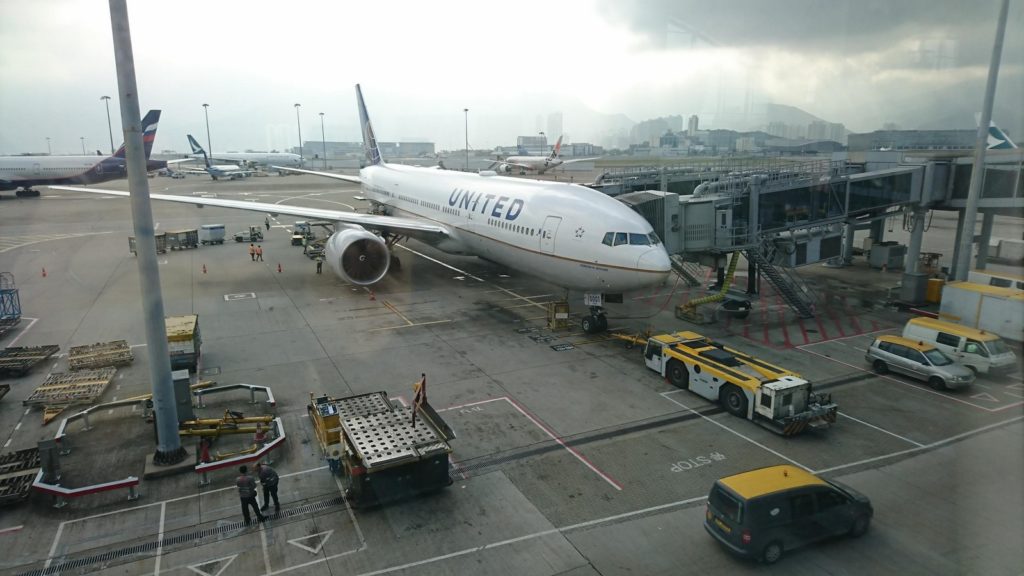
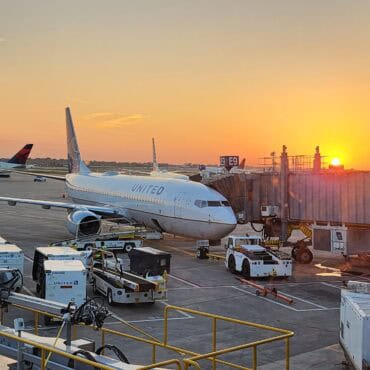
United was the first to unbundle business class in the US. Who’s next? Photo; Modhop
The Players: Who is Unbundling the Front?
United Airlines recently made waves by going live with its “Base Polaris” tier, announced on April 3, 2026. If you book this fare, you still get the Polaris lie-flat seat and the Saks Fifth Avenue bedding, but some of the extras are gone. You will not get access to the actual Polaris Lounge, those high-end sanctuaries with sit-down dining and shower suites. Instead, Base Polaris includes United Club access. You also cannot pick your seat in advance, the fare earns miles at a reduced rate, and it is not eligible for upgrades. If you want the full Polaris ground experience, this is not it. For more on the rollout, see United’s official announcement.
Delta has already confirmed that a three-tier business class structure is coming later in 2026. The easiest way to think about it is Basic, Main, and Extra framing for the front cabin. Delta has not released every detail yet, but the whole point of a setup like that is pretty obvious: one fare gets you the seat, another gets you the seat plus more comfort and flexibility, and the top tier gets you the full experience without the usual airline fine-print gymnastics.
American Airlines has not made a formal announcement yet, but leadership has been dropping hints about “nuanced pricing” for months. In airline-speak, “nuanced” usually means “you are going to pay more for things that used to be free.”
International carriers have actually been doing this for a while. Finnair, for example, has a very clear distinction between its “Light,” “Classic,” and “Flex” business fares. On a long-haul route like Helsinki to New York, the “Light” fare still gets you a real lie-flat seat, not some glorified recliner pretending to be premium. But it can still restrict lounge access and baggage compared with the more bundled fare types. On many long-haul routes, the gap between the stripped-down version and the more complete one typically falls in the $150–$300 range. You can compare the fare families on Finnair’s ticket types page.
Qatar Airways and KLM have similar “Business Light” tiers. If you are hunting for aspirational travel upgrades for everyone, these fares look like a win on paper. But as we always say at modhop, a deal is only a deal if it actually provides the value you expect.
Modhop Splurge Math: Is the Fancy Seat Enough?
When we look at whether a basic business class fare is worth it, we use a simple framework. We ask: What are you actually paying for, and what would it cost to add those perks back individually?
On long-haul routes, the jump from a stripped-down fare to a more complete one often lands in the $150–$300 range. That sounds annoying, because it is, but its also where the math gets interesting.
Perk
Typical value if bought separately or replaced yourself
Why it matters
Lounge access
$50–$100
This can be the difference between terminal chaos and a decent pre-flight meal with a place to sit
Seat selection
$40–$100
Especially useful if you care about privacy, window seats, or sitting next to your partner
Checked bag
$35–$75
Less sexy than lounge talk, but still real money on an international trip
Here is the cleaner, itemized version if you want the quick-and-dirty math:
Perk
Est. Out-of-Pocket Cost
Advance seat selection (long-haul)
$40–$80
Lounge day pass or airport meal equivalent
$50–$70
First checked bag (if not covered)
$30–$60
Total
$120–$210
If you add that up, you are already in roughly the same ballpark as that typical $150–$300 fare gap. So yeah, sometimes the “cheaper” business class fare is only cheaper in the same way airport trail mix is “just eight dollars.”
That said, the answer changes based on the trip. If you are a solo traveler with only a carry-on and you already have lounge access through a credit card, the base fare starts looking a lot more attractive. You are essentially paying for the bed and the sleep, which is often the most important part of upgrading to business class.
There is also what we call the Golden Ratio rule. If the flight is seven hours or more and overnight, the seat usually justifies skipping the lounge. Sleep wins. Under six hours, especially on a daytime trip, the lounge matters more because you are spending a bigger share of the experience on the ground and awake enough to notice every missing perk.
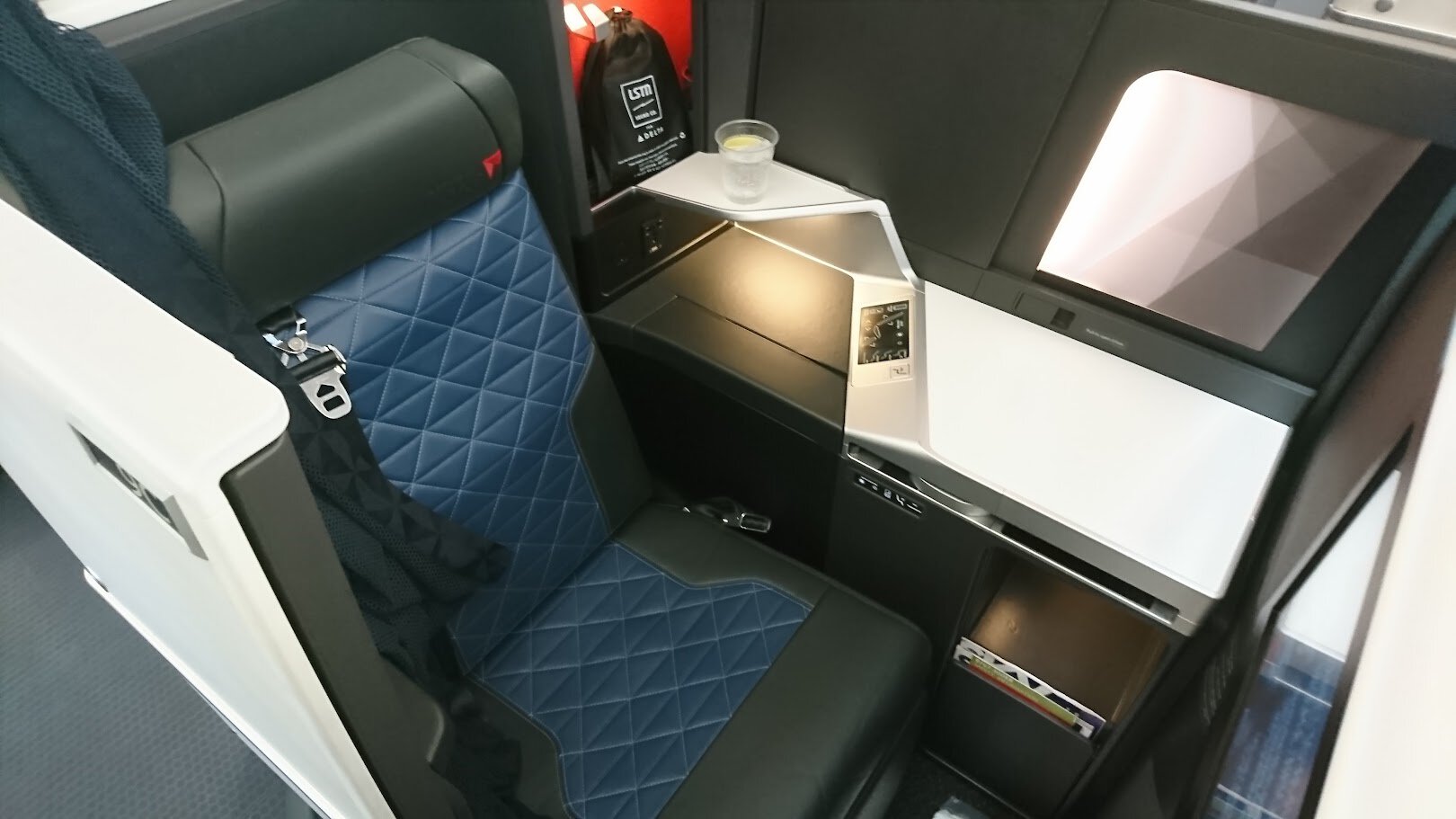
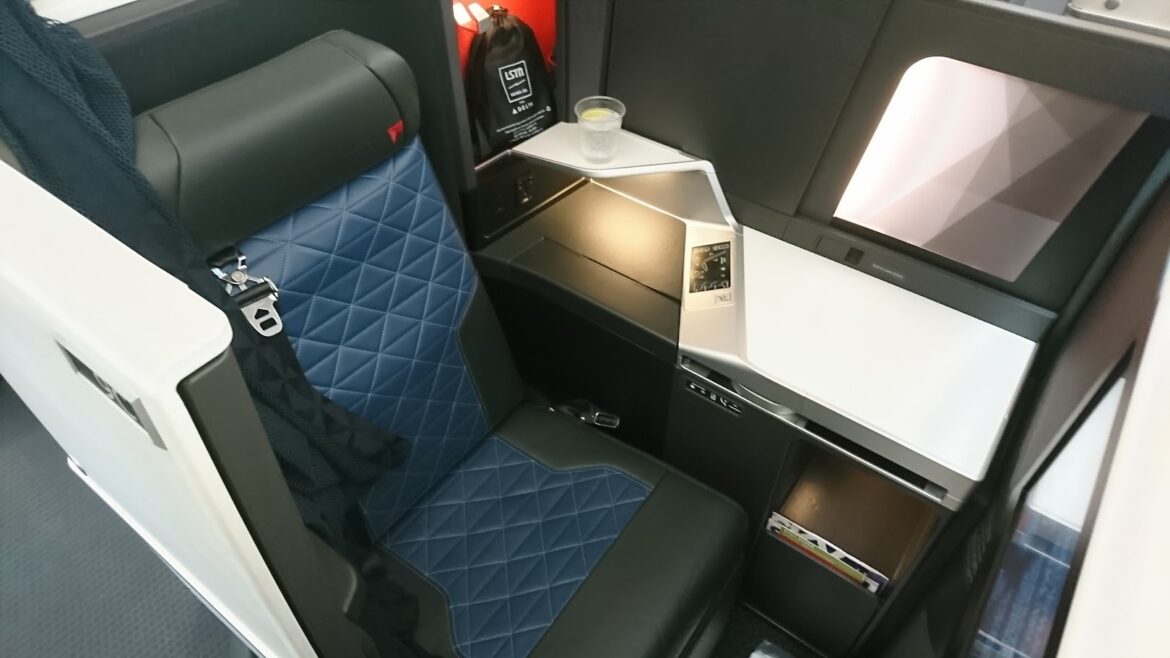
Delta’s take on basic business coming soon. Photo: Modhop
The Practical Playbook for the Occasional Upgrader
If you want to navigate this new era of unbundled luxury without getting burned, you need a strategy. Here are four rules to live by when booking your next big trip:
1. Always Check the Fare Tier Name
Airlines are getting clever with naming. Look for words like “Light,” “Base,” “Simple,” or “Essential.” If the price seems significantly lower than usual, click the “Fare Rules” or “Compare Tiers” button. If it says “Lounge Access: Not Included” or “Advance Seat Selection: Fee Applies,” you are looking at a basic fare.
2. Know Your Lounges
This is a big one. On United, the difference between a “United Club” and a “Polaris Lounge” is night and day. The United Club is the one with the mid cheese plate and CNN looping on a TV. The Polaris Lounge is the one with seared scallops and a private bar. Base Polaris gets you the first one, not the second. Also worth repeating: Priority Pass, including the versions that come through cards like the Amex Platinum or Chase Sapphire Reserve, does not get you into Polaris Lounges. If the lounge is half the reason you wanted to fly business, do not assume your wallet will save you here.
3. Consider the Route
If you are flying an 11-hour redeye from Los Angeles to Tokyo, the lie-flat seat is 90% of the value. You are there to sleep. In that scenario, skipping the lounge and the seat selection might be a trade-off you are willing to make to save $400. But if you are flying a sub-6-hour daytime flight, the unbundled fare might feel a bit stingy. That is where the Golden Ratio rule comes in handy: seven-plus hours overnight, the seat matters more. Under six hours, the lounge matters more.
4. Check Your Credit Card Coverage
Many of our favorite affordable luxury travel hacks involve using your wallet to fill the gaps. If your ticket does not include a lounge, do you have Priority Pass or another card-based option for a different lounge? If it does not include a checked bag, does your co-branded airline credit card cover it? Knowing what perks you already “carry” in your wallet can make a “Base Business” fare much more palatable.
5. Run a Real Search Before You Click
On United’s site, search your route as usual and then pay close attention to the fare comparison screen before checkout. If the booking flow shows Base, Standard, and Flexible under Polaris, click into the details instead of doing what most of us do, which is see the lower number and immediately become irrational. Look for seat assignment, checked bags, lounge access, changes, refunds, and upgrade eligibility. If you see United Club instead of Polaris Lounge, paid seat selection instead of included, and reduced mileage earning, you are looking at Base Polaris. That five-second pause can save you a very expensive “wait, what?” at the airport.
Polaris Lounge? Not with a basic fare with United. Photo: Modhop
The Modhop Verdict: Trade-off, Not a Scam
It is easy to get angry at airlines for “nickel and diming” even their highest-paying customers. And look, we get it: it feels a bit ridiculous to pay $2,500 for a ticket and then be told you cannot pick a window seat.
But at modhop, we view this as a trade-off rather than a scam. For the occasional upgrader, these unbundled fares can actually be a gateway to a better flight experience. If a “Base” fare brings the price of a lie-flat seat down into your budget range, it is a win, as long as you know exactly what you are giving up.
The danger is not the fare itself. It is the surprise. Nobody wants to show up at the airport in their “splurge” mindset only to be told they are not allowed into the lounge they thought came with the ticket. Go in eyes open, do the math, and decide if you are buying the whole business class experience or just a really comfortable place to take a nap. Both are valid choices, but only if you are the one making the call.
Basic Business Class FAQ
Does United Base Polaris include lounge access?
Yes. United Base Polaris includes access to a standard United Club. It does not include access to a Polaris Lounge, which is the premium lounge with sit-down dining, better cocktails, and actual pre-flight atmosphere.
What does United Base Polaris include?
Base Polaris includes the lie-flat Polaris seat, the onboard business class service, and United Club access. The trade-offs are where it gets less fun: no Polaris Lounge access, no complimentary advance seat selection, reduced mileage earning, and no upgrade eligibility.
Is basic business class worth it?
Sometimes, yes. If the flight is long and overnight, and you mainly care about sleeping flat, a stripped-down fare can absolutely make sense. If the route is shorter, daytime, or part of the splurge for you is the lounge and the little extras, paying more for the fuller fare may be the smarter move.
Which airlines offer basic business class fares?
United is now doing it with Base Polaris, and airlines like Finnair, Qatar Airways, and KLM have already offered versions of “Business Light” style fares. Delta is also moving toward a tiered setup later in 2026, using a Basic, Main, and Extra-style structure for its premium cabins.
For more deep dives into the changing world of air travel, keep an eye on our Airline Intel section here at modhop. We are here to help you navigate the chaos so you can get back to actually enjoying your trip.
Join the Conversation
Have you encountered a “Business Light” fare yet? Would you be willing to give up lounge access and seat selection if it meant saving a few hundred dollars on a lie-flat seat, or does that defeat the purpose of splurging? Drop your thoughts in the comments below: we’d love to hear how you’re weighing the math for your 2026 travels!
Modhop Founder Jake Redman brings years of global exploration and travel tips to the podcast and our videos at Modhop. Jake also produces audio branding for several music channels on SiriusXM.














Post comments
This post currently has no comments.