Let’s be honest: the “points and miles” world has become a full-time job. Unless you enjoy spending your Saturday nights cross-referencing transfer partners and opening your fourteenth credit card just to sit in a slightly wider seat, the whole process feels a bit exhausting. Most of us just want a better experience: a shorter line, a bigger room, or a flight where our knees aren’t touching our chin. These affordable luxury travel tips exist for exactly that reason — no spreadsheet required.
The good news is that the travel landscape in April 2026 has shifted. The “Occasional Upgrader” now has more power than ever because airlines and hotels have become hyper-focused on selling their premium inventory directly rather than just giving it away to top-tier elites. You don’t need a million miles to travel well; you just need to know where the system is currently leaking value. This one firmly sits in my Affordable Luxury lane: practical ways to spend smarter, not just spend more.
The Bold Verdict: Affordable luxury in 2026 is no longer about luck or loyalty status; it’s about tactical timing and a “frugal first class” strategy that prioritizes high-impact upgrades over prestige. By utilizing specific booking windows and direct-booking perks, you can secure 5-star experiences for 3-star prices without the points-nerd obsession.
We’ve all heard the advice to book six months in advance. In the current market, that’s often a mistake. When you book too early, airline revenue management software is still “testing the waters,” keeping prices high because they know early bookers are often price-insensitive. Conversely, if you wait until the last two weeks, you’re competing with corporate travelers whose companies don’t care if a ticket costs $1,200.
The real “affordable luxury” sweet spot currently sits between 31 and 45 days out. This is the window where hotels and airlines start to get nervous about unsold premium inventory. In my experience, the 31–45 day window is where I’ve consistently seen “buy-up” offers for business class and premium economy hit their best rates. On competitive routes, cabins are filling faster than they did a few years ago — but on thinner routes and off-peak travel days, this window still produces results.
Me, in the travel booking zone. Photo: Modhop
2. Preferred Partners (Virtuoso) vs. The Aggregators
Booking through a massive search engine is fine for a budget motel, but if you’re looking for how to get a hotel suite upgrade, you may be doing it wrong. There’s a quiet layer of the travel industry called “Preferred Partner” programs: think Virtuoso or Hyatt Privé.
These aren’t exclusive clubs for the ultra-rich; they are travel advisor networks that offer “baked-in” luxury. When you book a standard rate through one of these partners, you typically get free breakfast (which can cost $50+ at a luxury property), a $100 resort credit, and: most importantly: priority for room upgrades. You pay the same price as the hotel’s “best available rate,” but you’re treated like a VIP. It’s the ultimate affordable luxury travel hack because it costs you $0 extra to access.
3. The Tuesday & Friday Strategy
The old “book on a Tuesday” myth is dead, but flying on specific days for upgrades is very much alive. Most people think weekends are for leisure and mid-week is for business. In reality, Tuesday remains one of the quietest days for business travel, meaning those “upgrading to premium economy” offers are more likely to clear or show up at a lower price. My Tuesday flight to Atlanta on Delta last week, for example, had buy-up upgrades to both First and Comfort + available at increasingly affordable rates as flight day approached.
Friday is the “hidden” gem for leisure upgrades. While the back of the plane is packed with weekend vacationers, the business class cabin is often surprisingly empty because a lot of corporate travelers have already wrapped up their trips by Thursday. If you’re looking for a discounted lie-flat seat to Europe, check the Friday night departures.
4. Strategic Red-Eye Upgrades (Frugal First Class)
Not all flights are created equal. I’ve made the mistake of upgrading on shorter transatlantic flights like New York to London where the flight is only about six or seven hours. Even skipping meals, I only slept for a few hours (and not well!). Spending $3,000 for a bed you’ll only use for a few hours is bad math. But if you’re taking a long-haul red-eye, that’s where the “Frugal First Class” mindset kicks in.
Check the upgrade price at the 24-hour check-in mark. In 2026, many carriers are using “dynamic upgrade pricing.” If the premium cabin isn’t full, carriers would often rather take a discounted upgrade offer from you than fly with empty seats — and check-in window pricing frequently reflects that.
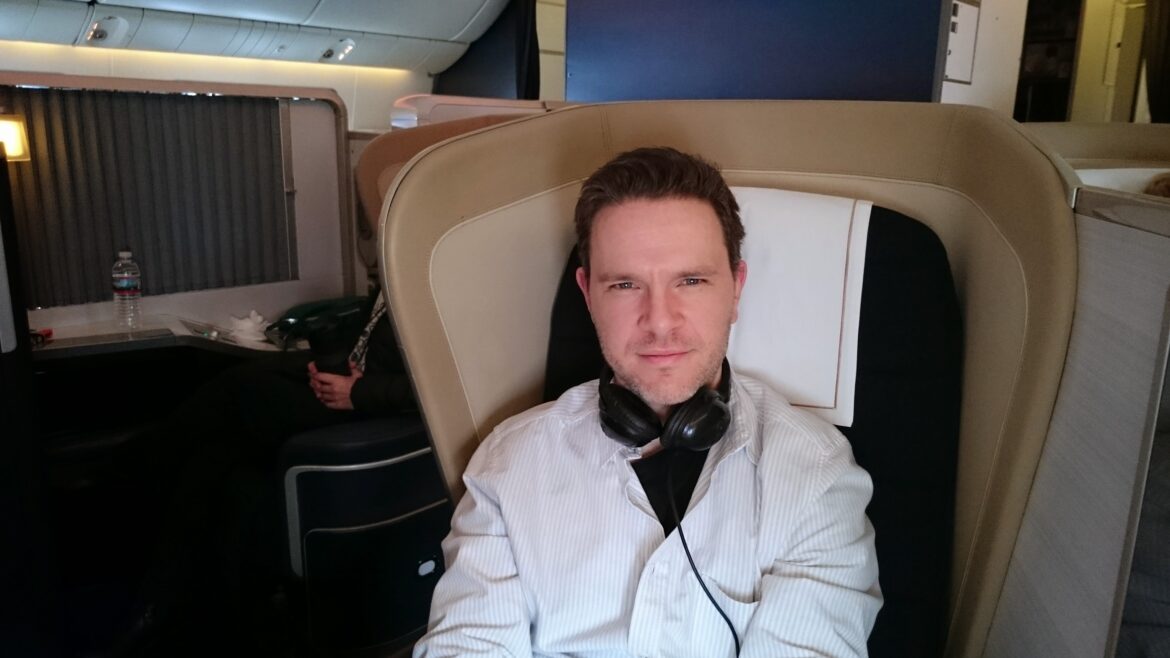
Classic pic as I get ready to not sleep on a modhop to London. Photo: Modhop
5. Direct Booking Perks (Hotel Intel)
There is a “secret” path to upgrades that most people ignore because they want to compare prices on a dozen tabs. Hotels hate paying commissions to third-party booking sites (often 15-25%). If you book directly on a hotel’s website and join their free loyalty program, you’re signaling to the property that you’re a higher-margin guest — and that gets noticed when upgrade decisions are made.
If you’re looking for hotel room upgrade tips, here’s a boss move: book the room directly, then send a polite, short email to the front desk manager a couple of days before arrival. Don’t demand anything; just mention you’re excited about the stay and ask if there are any “high-floor rooms with a view” available. Because you booked direct, they have the margin to be generous…if you booked with Expedia, not so much.
6. Destination Arbitrage: The New Map
Luxury is relative to where you are standing. If you want a 5-star experience in Paris or New York, you’re going to pay 2026’s peak prices: which, frankly, are a bit much. Affordable luxury travel tips often involve simply changing the “where.”
Look at “luxury frontiers” like Romania, Kyrgyzstan, Vietnam or even parts of Albania. In these regions, a top-tier luxury hotel might cost between $150 and $250 per night: roughly what you’d pay for a cramped room near a noisy pub in London. You get the white-glove service, the cartwheel-large bathrooms, and gourmet room service for a fraction of the cost, simply by choosing a destination where your currency goes further. Note: Kyrgyzstan is a stunning adventure/eco-luxury frontier, but if you’re looking for white-glove service, stick to the established luxury hubs in Romania or Montenegro where the infrastructure is more developed.
7. Luggage Hacks: The “Hands-Free” Vibe
Nothing kills a “luxury” vibe faster than sweating through your shirt while dragging a 50-pound suitcase over cobblestones or waiting 45 minutes at a baggage carousel. One of my favorite hacks isn’t about the flight or the hotel: it’s about the logistics.
Services like BagsAway or local “luggage concierge” apps allow you to drop your bags at secure locations for a few dollars. If you arrive at 8 AM and can’t check in until 3 PM, don’t be the person hovering in the hotel lobby. Drop the bags and go have a “hands-free” lunch. It sounds small, but the mental shift from “burdened traveler” to “unencumbered guest” is worth every penny.
If you don’t like to be separated from your stuff for long periods of time, pack light. One of my favorite hacks is to carry less and opt for on-site laundry. This doesn’t mean you have to do the work yourself. On a recent trip to Paris, I used Laundryheap to pick up, wash, fold, and deliver my laundry back to the hotel the following day. Your hotel may also offer on-site wash/fold service, which is even better for convenience, but may be pricier.
My clothes are always laundry-fresh in Paris. Photo: Modhop
Modhop Splurge Math™: The PPH Formula
I don’t believe in spending money just to feel fancy (okay, well maybe sometimes). I do believe in the PPH (Price Per Hour) formula. Before you pull the trigger on an upgrade, do the math.
Take the cost of the upgrade and divide it by the number of hours you’ll actually benefit from it.
Example: A $400 upgrade to Premium Economy on an 8-hour flight.
Math: $400 / 8 hours = $50 per hour.
So, the question now: Is the extra legroom, the better meal, and the ability to get off the plane 20 minutes earlier worth $50 an hour? If you were going to spend $30 on airport food and another $20 on a Wi-Fi pass anyway (on many carriers, both are included — check your airline before doing the math), then the “real” cost is $0 per hour. That’s a Modhop-approved splurge. If the PPH is over $100 for a daytime flight, you’re probably just paying for the ego boost.
FAQ: Affordable Luxury Travel in 2026
Is it still possible to get a free “operational” upgrade?
It’s rare. It happened to me once on a flight from New York to Dublin in 2012 as a Silver Medallion, solo traveler on Delta. But in 2026, most airlines use automated systems to offer paid upgrades to everyone on the flight list before a gate agent even touches the manifest. Your best bet for a “free” move is a broken seat or an oversold flight, but don’t count on it.
Does “incognito mode” actually make flights cheaper?
Mostly a myth. Airline pricing is based on complex demand algorithms, not whether you’ve visited the site twice. Focus on the 31-45 day window instead.
What’s the best way to get a hotel suite upgrade without status?
Book a “base level” room at a luxury property during the shoulder season and ask about “paid upgrade” options at check-in. Often, they will offer you a suite for $50 extra that would have cost $500 extra online.
The Bottom Line
Traveling well shouldn’t feel like a competitive sport. By focusing on the “Splurge Math,” booking direct, and timing your purchases, you can reclaim the joy of travel without the “luxury” price tag. You don’t need a black card; you just need to know when to blink.
Join the Conversation
What’s the one “luxury” perk you refuse to travel without, and how do you get it for less? Have you tried the PPH formula on your last trip? Drop your best affordable luxury travel hacks in the comments below!
Modhop Founder Jake Redman brings years of global exploration and travel tips to the podcast and our videos at Modhop. Jake also produces audio branding for several music channels on SiriusXM.
The big carriers are battling for the headline “Best airline wifi 2026“. If you have spent any time at 35,000 feet over the last decade, you know the struggle. You […]















Post comments
This post currently has no comments.