If you’re asking: “Is the Bilt card worth it in 2026?”, the answer depends entirely on how you manage your card stack. There was a time, not so long ago, when the Bilt Mastercard was the undisputed darling of the points and miles community. It was the “unicorn” card: a no-annual-fee piece of plastic that finally solved the greatest mystery of adulthood: how to earn rewards on your biggest monthly expense. For years, rent was a black hole for value, but Bilt changed that. It was simple, it was sleek, and it was effective. But as the calendar flipped into 2026 and Bilt 2.0 launched on February 7, 2026, the “Bilt Blue” in my wallet started feeling less like a reward and more like a second job I never applied for.
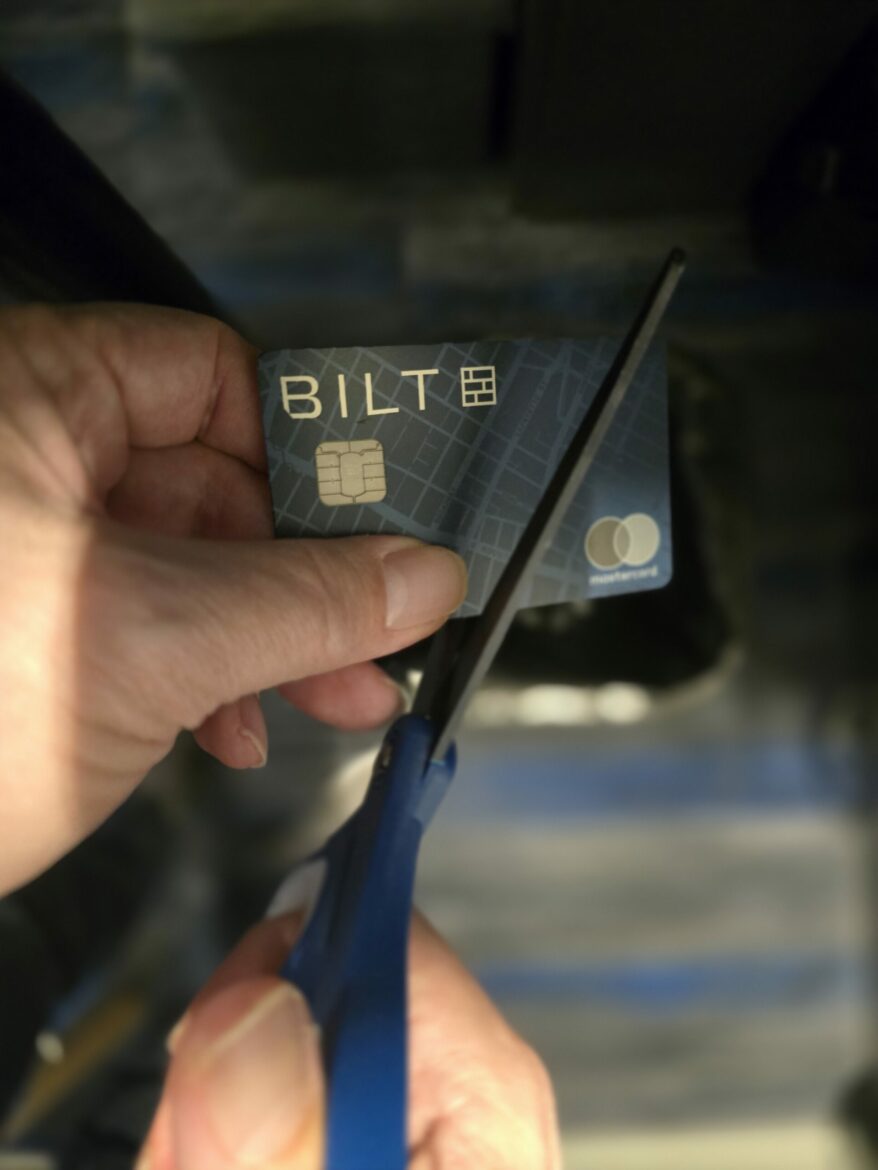
I recently made the decision to cancel my Bilt card, and honestly, it felt like a weight being lifted off my shoulders. It’s not that the card is inherently bad. It’s that it has transitioned from a game-changer to a brain-drainer. As an Occasional Upgrader, I’m all for a bit of strategy to land that business class seat. But there’s a fine line between a savvy maneuver and a full-blown accounting project. Bilt has officially crossed that line for me.
The Original Magic vs. the New Complexity
When Bilt first launched, the pitch was incredibly straightforward. You paid your rent through their platform, joined the old “Five-Tap Club” by making five small transactions a month to unlock your points, and earned 1x on rent. It was a low-friction way to accumulate some of the most valuable transfer partners in the game, including Hyatt and American Airlines, before that partnership famously dissolved. It was the ultimate set-it-and-forget-it play for the modern renter.
Fast forward to the current Bilt Blue era, and the simplicity has been replaced by a tiered, gamified ecosystem that requires constant monitoring. The introduction of Bilt Cash has turned a simple value proposition into a mathematical headache. You’re no longer just earning points. You’re managing a second internal currency, tracking thresholds, and doing side quests just to make the housing rewards math work.
Photo: Modhop
The “Bilt Cash” Mechanic: A Step Too Far
The real deal-breaker for me was the new mechanic where you essentially have to earn your way into housing points. To be clear, Bilt cards don’t charge a fee for rewards on housing. Instead, the program uses Bilt Cash to unlock points on those payments. Under Bilt 2.0, 30 Bilt Cash unlocks 1,000 points. That’s the exchange rate Bilt set, and it’s explained in their official breakdown of the new mechanic.
That sounds neat until you run the numbers. To generate enough Bilt Cash, cardholders effectively need to spend about 75% of their housing payment amount on the card in non-rent purchases just to earn 1x points on housing. So if your rent or mortgage payment is $2,000, you may need roughly $1,500 in non-housing spend on the card to fully unlock the points. That’s not a small side quest. That’s a whole budget reassignment.
For most people, that doesn’t sound terrible at first. But for those of us who already manage a carefully curated stack of cards, this is a massive opportunity cost. If I’m putting $1,500 of everyday spend on my Bilt card just to unlock the ability to earn points on housing, I’m potentially giving up 3x or 4x multipliers elsewhere.
This is where the Stack Tax comes in. It’s Modhop’s term for the hidden cost of routing everyday spend through a suboptimal card just to unlock a benefit somewhere else. What are you actually giving up by forcing that spend?
Modhop Stack Tax Calculator: Bilt vs. Amex Gold
Scenario
Spend Redirected to Bilt
Total Bilt Points (spend + housing)
Same Spend on Amex Gold
Opportunity Cost
Unlock 1,000 housing points
$1,500
1,500 Bilt points + unlocks 1,000 housing points
6,000 Membership Rewards points on 4x grocery/dining categories
Roughly 3,500 fewer points earned overall
Unlock 2,000 housing points
$3,000
3,000 Bilt points + unlocks 2,000 housing points
12,000 Membership Rewards points on 4x grocery/dining categories
Roughly 7,000 fewer points earned overall
Unlock 3,000 housing points
$4,500
4,500 Bilt points + unlocks 3,000 housing points
18,000 Membership Rewards points on 4x grocery/dining categories
Roughly 10,500 fewer points earned overall
That’s the part that broke it for me. When you calculate the Stack Tax, the value of those housing points often doesn’t outweigh the rewards you sacrificed to get them. It’s a classic case of robbing Peter to pay Paul, and Peter is getting tired of the paperwork.
Mental Real Estate and “Credit Card Tetris”
Let’s be real: being a travel enthusiast in 2026 is exhausting. Between the American Express Platinum’s monthly Uber credits, the Saks Fifth Avenue use-it-or-lose-it vouchers, the Marriott Brilliant’s dining credits, and the airline incidental hoops we have to jump through, my brain is already at max capacity. I find myself checking apps on the 28th of every month like I’m closing the books for a Fortune 500 company.
Adding Bilt’s tiered requirements and Rent Day challenges to this mix was the straw that broke the camel’s back. I’ve reached a point where mental real estate has a real value. If a card requires me to think about it more than once a month, it better be delivering a massive, obvious return. Bilt has moved into territory where I’m spending more time calculating my Bilt Cash balance than actually enjoying the rewards.
That feeling got worse in March 2026, when CFPB complaints surfaced from renters saying their payments weren’t reaching landlords on time. Even if that issue didn’t hit every customer, it added another layer of stress to a product that already asked for too much attention. If I’m going to route the biggest bill of my month through a fintech middleman, I need boring reliability. Not another thing to monitor.
To give you an idea of how insane this has become, many of us have resorted to using external tracking systems just to keep our heads above water. I’ve found myself leaning heavily on resources like the Frequent Miler credit tracking spreadsheets just to make sure I’m not leaving money on the table. When you need a custom-built Excel document to manage your wallet, it’s a sign that the gamification of travel rewards has gone a bit too far.
The Balanced View: Who is Bilt For?
I want to be fair here: Bilt isn’t a scam and it isn’t useless. In fact, for a specific type of traveler, it’s still a fantastic tool. If you are a one-card or two-card person who doesn’t want to deal with a dozen different annual fees, Bilt is a powerhouse. It’s one of the few ways to get a return on housing, provided you follow the rules, and for a minimalist that still matters.
However, for the Occasional Upgrader who already has a Sapphire Reserve or a Citi Strata Premier, The work isn’t worth the reward anymore. When you compare the Bilt experience to a mid-tier workhorse like the Chase Sapphire Preferred, the difference is stark. With the Sapphire Preferred, I know exactly what I’m getting, the points are easy to earn, and I don’t have to unlock my ability to use the card by jumping through monthly hoops.
The Allure of Simplicity
There is a growing movement in the travel world toward simplicity as a luxury. We’ve spent the last decade chasing every half-point and optimizing every cent, but at some point, the friction starts to erode the joy of the journey. Canceling my Bilt card was a conscious choice to prioritize my time and mental energy over a few thousand extra points a year.
I’ve moved those everyday purchases back to cards that offer higher multipliers without the Bilt Cash gymnastics. My housing payment has returned to being simple: less drama, less tracking, less weird math. I’ve realized that I’d rather have a slightly smaller points balance and a lot more free time than a massive pile of points that required a part-time job to accumulate.
If you’re looking at your Bilt Blue card and feeling a sense of dread when Rent Day notifications pop up, it might be time to do your own audit. Ask yourself: Is the math actually working in your favor once you account for the lost multipliers on other cards? And more importantly, is the brain-drain worth the eventual flight? For me, the answer was a clear no.
FAQ
Why did I cancel my Bilt card in 2026?
I canceled my Bilt card because Bilt 2.0 made the program much more complex. The new Bilt Cash mechanic, tiered spending requirements, and added mental overhead made the rewards math stop working for me.
What is the Bilt Cash mechanic?
Bilt Cash is the internal currency Bilt now uses to unlock points on housing payments. Under the new system, 30 Bilt Cash unlocks 1,000 points, which means you may need substantial non-rent card spending to make your housing rewards fully count.
Is Bilt 2.0 worth it for renters?
Bilt 2.0 can still be worth it for renters who want a simple one-card or two-card setup and don’t mind directing a lot of everyday spending to the card. For people already optimizing across several cards, the opportunity cost may be too high.
What was the Five-Tap Club?
The Five-Tap Club was the nickname for Bilt 1.0 cardholders who made exactly five small transactions each month — the minimum needed to unlock rent points. It wasn’t exactly elegant, but compared with the new system, it now looks almost charming.
What is the Stack Tax?
The Stack Tax is Modhop’s term for the hidden opportunity cost of redirecting everyday spend to a card that earns less, in order to unlock a benefit on that card. In this case, it means calculating whether the housing points you unlock on Bilt are actually worth the stronger multipliers you gave up by not using your best-earning card for that same spend.
Join the Conversation
Are you still ride-or-die for Bilt, or have the recent changes to Bilt 2.0 started to wear you down? Do you find the Bilt Cash mechanic clever or just plain exhausting? Drop a comment below and let’s talk about whether the credit card Tetris of 2026 has finally reached its breaking point, or if you’ve found a system that still makes Bilt worth it.
Modhop Host & Founder Jake Redman brings years of global exploration and travel tips to the podcast and our videos at Modhop. Jake is also a Producer and Host for SiriusXM.
Remember the good old days when checking a bag was just a routine annoyance? You’d shuffle to the kiosk, print a tag, and swipe for thirty bucks…or maybe thirty-five if […]
On top of everything you mentioned about the new structure and amount of time it takes even the things Bilt offers non Bilt credit card holders to earn points on require an immense amount of additional time and effort. I’m constantly having to reach out to Bilt support as frequently Walgreens RX fills and neighborhood dining purchases don’t sync and between dealing with the clanker initially and then having to wait for a human to follow up its not worth it at all.









 FAQ
FAQ







Chiguy312 on April 14, 2026
On top of everything you mentioned about the new structure and amount of time it takes even the things Bilt offers non Bilt credit card holders to earn points on require an immense amount of additional time and effort. I’m constantly having to reach out to Bilt support as frequently Walgreens RX fills and neighborhood dining purchases don’t sync and between dealing with the clanker initially and then having to wait for a human to follow up its not worth it at all.